Rodent Removal in Kingwood, TX
Kingwood was planned as a forest with houses in it, and the pines and oaks that make the villages what they are also carry roof rats onto every roof. The free inspection finds the opening, and the quote separates sealing from trapping.
- Free inspection of roof and attic
- TDA-licensed contractors on every job
- Someone answers 24 hours a day
Free Inspection in Kingwood
The free inspection on a Kingwood house is a roofline job before it is anything else, because nearly every house in the villages is a brick-veneer home on a slab with a vented shingle roof under a tree canopy. Whoever attends walks the roof for split pipe boots, cracked vent bases, roof returns and the soffit-to-brick joint, checks where limbs touch or overhang the eaves, reads the attic insulation for runs and droppings, and checks the garage seal and utility penetrations at ground level. The quote that follows lists trapping, sealing and any cleanup separately. Kingwood lies roughly 25 to 30 miles northeast of downtown Houston off U.S. 59 and Interstate 69, past Humble and across the West Fork of the San Jacinto River; it was annexed into the City of Houston at the end of 1996 and spans the Harris and Montgomery county line, and all of it is inside the service area.
The phone at (713) 804-8785 is answered 24 hours a day. If you have been awake at three in the morning tracking footsteps across the ceiling and starting to wonder whether anyone believes you, that is the call. Book a free inspection and we work out what has happened at the property.
The Livable Forest puts pines and oaks against every roofline
Kingwood is a 14,000-acre master-planned community begun in 1971 as a joint venture between the Friendswood Development Company and King Ranch, marketed from the start as the Livable Forest, and the canopy that was the selling point is the reason roof rats reach Kingwood attics so easily. Wikipedia records more than 500 acres of nature preserves and over 75 miles of greenbelt trails threaded through the villages, and the lots were cut with the loblolly pines and hardwoods left standing. UF/IFAS describes the roof rat as an arboreal animal that travels along limbs, trunks and utility lines, and a pine leaning over the eaves or an oak limb resting on the shingles is a ramp straight to the roof.
Once on the roof, the openings are the ones every Houston-area slab house has. The houses in the older villages date from the 1970s and 1980s and the newer villages from the 1990s and 2000s, and on all of them the sun has been at work on the rubber pipe boots and the plastic bases of mushroom and turbine vents, which crack within a few years in this climate. Add the roof returns where a gable meets a lower slope and the joint where the soffit meets the top of the brick, and a Kingwood roof can have several openings at the quarter-inch rat-proofing standard that Florida extension publishes. The rodent exclusion page explains the roofline sealing these houses get: sheet metal over returns and fascia gaps, steel mesh behind vents, metal collars on pipe penetrations, and a recommendation to cut limbs back off the roof.
Lake Houston and the San Jacinto River forks flood, and the rodents move uphill
Kingwood is bounded by water: Lake Houston to the south, the West Fork of the San Jacinto River to the west and the East Fork to the east, and the villages that back onto the river and the lake carry the flood exposure and the rodent pressure that go with a river bottom. Norway rats burrow in the banks and the storm drains; roof rats work the brush along the greenbelts. When the river rises, both head for the nearest dry structure.
Hurricane Harvey in August 2017 is the event Kingwood measures everything against. Wikipedia and local reporting at the time record severe flooding made worse by record releases from Lake Conroe upstream, hundreds of boat rescues over two nights, residents waiting in attics, and whole subdivisions near Town Center, including The Enclave and The Barrington, under water. Houston pest firms told local news afterward that rodents moved into attics across the region. The CDC ties increases in leptospirosis to hurricanes and floods, counts rodents among the reservoirs and recommends rodent control as post-flood prevention. Then came Hurricane Beryl in July 2024: Community Impact reported Sand Creek Village among the neighborhoods with downed trees and power out for over a week, and ABC13 reported a tree crashing through a house on Sycamore Springs Drive. In a forest neighborhood a wind event means limbs on roofs, lifted soffit panels and torn vent caps, every one of them a way in. A house that took water in 2017 or lost a tree in 2024 is a candidate for the post-storm rodent inspection.
Kingwood attics hold blown insulation that rats nest in and humidity keeps damp
The vented attics in Kingwood houses are filled with blown fiberglass or cellulose, and the cellulose in particular makes a roof rat comfortable: it is loose, it tunnels well, and once soaked with urine it stays damp in Gulf humidity that averages around 73 percent across the year. The Department of Energy notes that compressed insulation stops delivering its rated R-value and wet insulation performs poorly, and a season of runs pressed into cellulose does both. Under a pine canopy that shades the roof, the attic also dries more slowly after a leak or a storm than an open-lot roof in a prairie subdivision would.
That is why cleanup in Kingwood tends to mean remove-and-replace along the affected bays instead of a spot treatment, and why it is quoted as its own line after the sealing and trapping are priced. The attic cleanup page covers what gets removed and what gets treated, and the rat removal page covers the trapping and sealing sequence that has to happen first.
What We Handle in Kingwood
Rodent work in Kingwood is mostly roofline exclusion on brick slab homes under trees, with trapping alongside and attic cleanup where cellulose has carried a season of nesting. These are the services a Kingwood call turns into.
- Rat removal: roof rats that came down a pine onto the shingles, trapped on the attic runs and sealed out at the roofline
- Mouse removal: house mice and field mice from the greenbelts and the lake edge once the nights cool
- Rodent exclusion: metal over roof returns and fascia gaps, mesh at vents, collars on pipe boots, the soffit-to-brick joint closed
- Rodent inspection: the free walk of roof, attic and ground line that produces the itemized quote
- Attic cleanup: soiled cellulose removed along the runs and the space decontaminated
- Attic insulation replacement: fresh blown insulation after a cleanup in a house that lost a bay or more to nesting
- Post-storm rodent inspection: the roof and attic check after a tree comes down or the river comes up
A Typical Kingwood Job
The situation: A couple in a two-story brick home in one of the older Kingwood villages lost a large pine limb onto the rear roof during Beryl. The roofer patched the shingles and left. By the first cool week of fall there is scratching over the upstairs bedroom every night and a sour smell in the hall closet below the attic hatch. The wife has moved to the couch downstairs to get any sleep.
What gets done: Whoever attends finds that the limb strike bent a section of soffit away from the brick and left a gap the length of a hand along the joint, a few feet from a second pine whose branches still rest on the roof. Inside, the blown cellulose above the bedroom is tunneled and wet along two joist bays, with droppings a quarter to half an inch long, banana shaped and pointed at the ends, which is the roof rat signature that extension guidance describes. The soffit joint is closed with galvanized hardware cloth screwed to the framing, a cracked boot on a nearby vent stack is replaced, snap traps go on the runs, and the couple is told which limbs need to come off the roof.
How it turns out: Three roof rats come out over the first week and then the traps sit empty. On the return visit there are no new droppings and no gnawing at the closures, the two wet bays of cellulose are removed and replaced, and the smell in the closet is gone within days of the insulation leaving. The couple has a written list of the closures and a tree crew booked for the limbs.
What This Costs in Kingwood
A Kingwood rat job is priced against Angi's Houston data, where the typical job comes in around $831 and the bulk of homeowners pay somewhere between $381 and $1,370; the table gives typical-job bands, and the free inspection converts them into an itemized quote for the house in front of it. HomeGuide's national 2026 ranges sit alongside.
| Line item | Houston (Angi) | National (HomeGuide 2026) |
|---|---|---|
| Inspection | Free here; charged at $100 to $200 by others | $0 to $175 |
| Trapping and removal | Typical job about $831; $381 to $1,370 for most | $250 to $1,200 |
| Follow-up visits | $50 to $150 each | Inside the job band |
| Exclusion sealing | $430 to $1,300 | $500 to $2,500 for a whole house |
| Attic cleanup and decontamination | Set at inspection | $600 to $2,500 |
| Insulation removal and replacement | Set at inspection | $2.50 to $5.50 a square foot |
| Full restoration after a long infestation | Set at inspection | $3,000 to $10,000 and up |
What pushes a Kingwood quote up the band is the roof and the attic together. A one-story house with one cracked vent seal is a short job. A two-story house under pines with several roof returns, a long open soffit joint and two bays of wet cellulose sits toward the top, and the insulation work is a separate line the inspection either finds or does not. Ask for every item on its own line, ask whether the return visit is included, and ask what the contractor's warranty on the sealing covers and for how long.
Why mice keep coming back
A look at the openings that make it repeat.
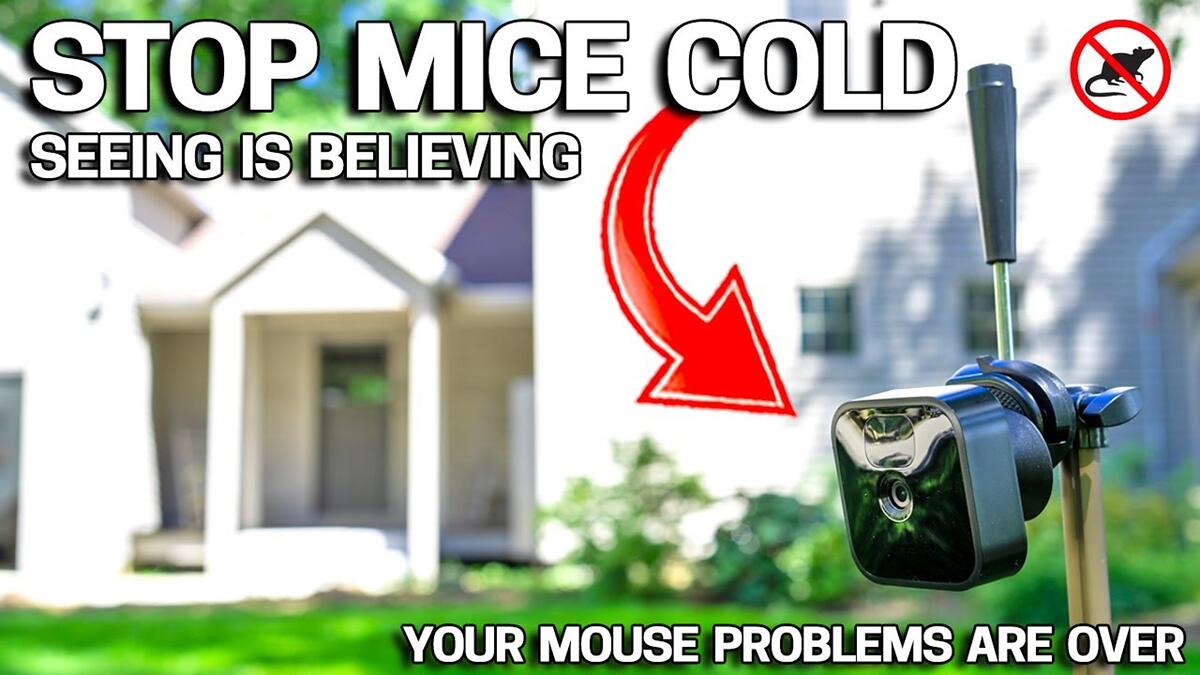
Video: EASY WAY to Get Rid of Mice in Your House FOREVER, from Silver Cymbal.
Common Questions in Kingwood
What callers from Kingwood ask before booking.
Getting rid of them
What keeps rats away permanently in a neighborhood this wooded?
A sealed roofline keeps rats out for as long as the closures hold, and in Kingwood the closures last longer when the trees are kept off the roof. Repellents, ultrasonic plugs and a cat do nothing against an animal that arrives by pine limb and never touches the ground. Limbs cut back from the eaves, a garage seal replaced when it tears, and a walk of the roofline after every storm are the maintenance. UF/IFAS notes that roof rats range about 150 yards from the den, so the greenbelt behind the fence will always hold rats; the job is a house they cannot enter.
Is it safe to do exclusion before trapping?
Sealing first is the safe order when traps go in the same day, so anything already in the attic comes out in a trap instead of chewing down into a wall or the garage ceiling. The sequence on the jobs we route in Kingwood is to close every opening except one known main entry, set snap traps on the runs, leave them at least a week because roof rats are wary of new objects, and finish the last closure at the return visit once the attic has gone quiet. Sealing a house and leaving is the version that goes wrong.
Kingwood houses and contractors
Kingwood is in Houston but partly in Montgomery County. Does that change who can do the work?
Licensing for rodent work is set at the state level, so it reads the same on both sides of the county line and inside or outside the Houston city limits. Any business controlling rats or mice for pay needs a Texas Department of Agriculture business license through the Structural Pest Control Service and a certified applicator, shown on the vehicle as a TPCL number. Live trapping alone has been exempt since 2009; placing bait requires the license. Every contractor we route holds the TDA license the job needs, and the TDA flyer on rodent control tells homeowners to check the license status before signing anything, which is good advice on either side of the line.
Should I worry about hantavirus in the attic insulation?
The risk in a Kingwood attic is low. Most hantavirus cases in the United States occur in the West, and the species behind them are field rodents. A respirator during attic cleanup is still the right call, because soiled insulation is a general contamination problem: the CDC notes rodents carry many diseases spread through urine, droppings, saliva and bites, and through the fleas, ticks and mites that fed on them. The honest reason to wear protection is that reason, and the attic cleanup page describes how the work is done.
Still have a question? Call (713) 804-8785 and ask.
Nearby Areas We Serve
The same contractors cover the towns around Kingwood, and the service area takes in Harris and Montgomery counties along with the rest of the Houston metro.