
Rodent Removal in Spring, TX
Spring grew fastest during the oil boom of the 1970s and 80s, and those brick-veneer slab houses along Cypress Creek and Spring Creek are now forty years into their roof vents and pipe boots. The free inspection finds where rodents are getting in.
- Free roofline and attic inspection
- Licensed contractors on every job
- Someone answers 24 hours a day
Free Inspection in Spring
The free inspection on a Spring house starts on the roof, because most houses here are slab-on-grade with a vented shingle roof and the openings are up there: cracked seals on mushroom and turbine vents, split rubber pipe boots, the soffit-to-brick joint, roof returns and fascia gaps. Whoever attends then reads the attic for droppings, runs through the blown insulation and nesting, checks the garage door seal and the utility penetrations at slab level, and writes an itemized quote that separates trapping, sealing and any cleanup. Nothing is agreed before that.
Spring is a census-designated place roughly 20 to 25 miles north of downtown Houston on Interstate 45, outside Beltway 8, spread across Harris County and the southern edge of Montgomery County, and it is inside the regular service area. The phone is answered 24 hours a day. Weeks of scratching over the ceiling wears anyone down, and a household that has started to doubt itself is a common first call. Book a free inspection and we work out what has happened at the property.
Spring's oil-boom subdivisions are at the age where vents and boots fail
The bulk of Spring's housing went up in the 1970s and 1980s, when Houston's suburbs pushed north along Interstate 45 during the oil boom, and a brick-veneer slab house of that age has roof components at the end of their life. Wikipedia records the population climbing from 33,111 in 1990 to 54,298 in 2010 and 62,559 by the 2020 census, with the subdivision wave starting in the boom years before that. These houses have no crawl space, so a rat has no way in at ground level beyond a torn garage seal or a gap around a pipe. The roofline is the door.
Houston heat and ultraviolet split rubber pipe boots and crack the plastic bases of mushroom vents within a few years, and a roof from 1982 has been through several replacement cycles or none. Add the soffit-to-brick joint that builders of that era left open, the roof returns where a gable meets a lower slope, and the brick weep gaps, and a forty-year-old house in a Spring subdivision can have half a dozen openings at the quarter-inch standard that UF/IFAS gives as the rat-proofing figure. Roof rats reach them from the mature oaks and pines the subdivisions were planted with, or along the utility line to the fascia.
Exclusion on these houses is roofline work: sheet metal over roof returns and fascia gaps, steel mesh behind vents, new metal collars on pipe penetrations, and screening at the weep gaps that lets them drain. The rodent exclusion page walks through the materials.

Cypress Creek and Spring Creek carry rodents and floodwater through Spring
Spring is bounded by Cypress Creek on the south and Spring Creek on the north, and both are rodent travel lanes as well as flood risks. Norway rats burrow in creek banks and storm drains and stay low, while roof rats work the tree line along the greenbelts. During Hurricane Harvey in August 2017 the Harris County Flood Control District measured about 30 inches of rain at several points along Cypress Creek over August 25 to 30, more than twice the Tax Day flood of April 2016, and neighborhoods including Inverness Forest and Northwood Pines were evacuated as the creeks rose, according to Community Impact. The county courthouse annex on Cypresswood Drive was a total loss.
Flooding pushes rats and mice out of burrows, drains and low harborage and into garages and attics, and Houston pest firms reported to local news after Harvey that rodents moved into attics across the area. The CDC connects floods and hurricanes to more leptospirosis, names rodents as a reservoir, and recommends dealing with them after high water. Hurricane Beryl in July 2024 added wind: limbs down on roofs and soffit panels lifted across north Harris County, each one a potential opening.
Houses backing onto either creek, and any house that took water in 2016 or 2017, are worth a ground-level check as well as the roofline walk. The post-storm rodent inspection covers both.
Old Town Spring has the older frame buildings
Old Town Spring is the exception to Spring's slab-house pattern, with restored frame buildings from the railroad era that behave more like an inner-loop bungalow than a subdivision house. The town grew on the International and Great Northern Railroad from 1871 and peaked around 1910 as a rail hub, and the Old Town Spring Association has preserved the surviving structures as a shopping district since 1980. Raised wood floors, open skirting and unsealed transitions give Norway rats access below and roof rats access above, and a shop that stores stock or food draws both. Commercial work in Old Town is quoted the same way as a house, with sealing itemized from trapping; the commercial rodent control page describes it.
Who can do rodent work in Harris and Montgomery counties
Any business controlling rats or mice for pay in Spring needs a Texas Department of Agriculture structural pest control license with a certified applicator, whichever county the house sits in, and every contractor we route holds the TDA license the job needs. The business license number rides on the vehicle as a TPCL number. TDA's consumer flyer on rodent control says to ask for credentials and check the license status before signing anything. Live trapping alone has been exempt since June 2009 under Occupations Code Section 1951.058, but placing rodenticide bait requires the license. Ask for the TPCL number and confirm it with the Texas Department of Agriculture before work begins. The about page lists the other questions worth asking.
What We Handle in Spring
The work routed in Spring covers the full run from a first inspection to a rebuilt attic, quoted line by line.
- Rat removal: roof rats trapped in the attic of a 1970s or 80s brick-veneer house while the roofline is closed.
- Mouse removal: house mice in garages and kitchens, and field mice that come in from the creek greenbelts when nights cool.
- Rodent exclusion: metal over roof returns, vent bases, pipe boots and the soffit-to-brick joint that a boom-era builder left open.
- Rodent inspection: the free roofline and attic check with an itemized quote.
- Attic cleanup: contaminated blown insulation removed, with remove-and-replace when cellulose has held urine and Gulf humidity for months.
- Attic insulation replacement: fresh blown fiberglass after a strip-out, since the Department of Energy notes wet insulation performs poorly.
- Post-storm rodent inspection: a roofline and slab-level check after a creek flood or a wind event like Beryl.
A Typical Spring Job
The situation: A family in a one-story brick ranch off Cypresswood Drive, built in the early 1980s, notice a musky smell in the hall closet and a scatter of dark droppings on top of the water heater in the garage. The house backs onto a drainage easement that feeds Cypress Creek. Their teenager has been hearing something in the wall behind her bed for a month and was told it was the air conditioner.
What gets done: Whoever attends finds a turbine vent with a cracked base on the rear slope and a rubber boot on the kitchen plumbing vent split around its collar, both with rub marks. Inside the attic there are roof rat droppings along the top plate over the teenager's room and a nest pulled together in the cellulose over the hall. The vent base is replaced and screened with steel mesh, the boot gets a metal collar, the garage door seal is replaced where daylight shows at the corner, and snap traps go on the runs. The cellulose over the hall is quoted as a separate line for removal and replacement because it has held urine through a humid summer.
How it turns out: Four rats come out in the first week. The follow-up visit finds the traps empty and no new droppings, and the family go ahead with the attic section. The smell in the closet fades with the cleanup. The teenager sleeps through the night for the first time in weeks, which is what the parents mention when they call back.
What This Costs in Spring
Rodent work in Spring is quoted from the Houston-area bands below, and the free inspection produces the itemized figure for a specific house. Angi's Houston figures put a typical rat exterminator visit between $381 and $1,370, averaging around $831, with exclusion at $430 to $1,300 and follow-up visits at $50 to $150 each; an inspection that costs $100 to $200 elsewhere is free here. The national HomeGuide 2026 bands sit alongside.
| Line item | Houston (Angi) | National (HomeGuide 2026) |
|---|---|---|
| Inspection | Free here ($100 to $200 elsewhere) | $0 to $175 |
| Trapping and removal | $381 to $1,370, around $831 on average | $250 to $1,200 |
| Exclusion sealing | $430 to $1,300 | $500 to $2,500 full home |
| Follow-up visits | $50 to $150 each | Varies by contractor |
| Attic cleanup and decontamination | Quoted at inspection | $600 to $2,500 |
| Insulation removal and replacement | Quoted at inspection | $2.50 to $5.50 per sq ft |
| Dead rodent removal | Quoted at inspection | $150 to $500 |
| Full restoration | Quoted at inspection | $3,000 to $10,000 and up |
On a boom-era Spring house the count of failed roof components is what moves the exclusion line, and the age of the infestation is what moves the cleanup line. A one-story ranch with two openings sits low in the band; a two-story with six openings and a cellulose strip-out sits high. Every quote keeps trapping, sealing, cleanup and return visits separate, and whoever attends should state the warranty terms on the sealing before work starts.
Rodents in the attic
What is happening above the ceiling, explained.
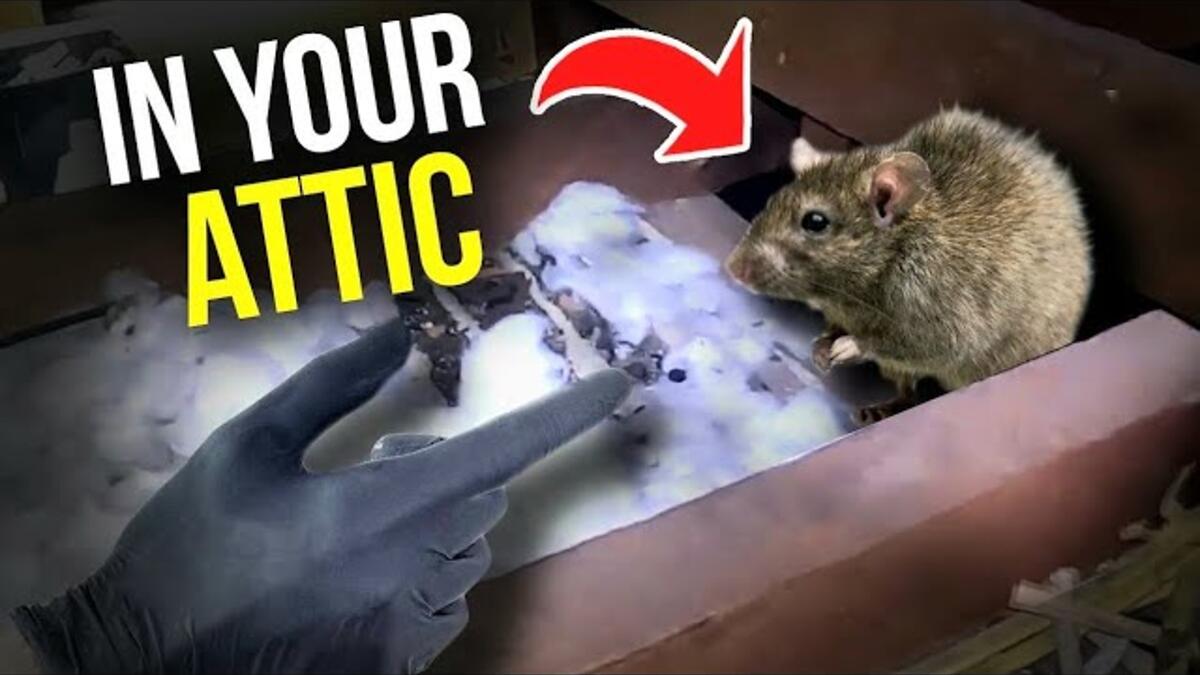
Video: Rodents in your ATTIC!? Here's what you do, from Twin Home Experts.
Common Questions in Spring
What callers from Spring ask before booking.
Getting rid of them
What is the cheapest way to get rid of rats in Spring?
The cheapest job that ends is sealing the roofline and trapping at the same time, because the alternative gets paid for twice. Poison alone looks cheaper on the day, then produces a dead animal in the wall and a new arrival through the same open vent a month later. Trapping alone without sealing is the practice homeowner forums criticize most, since it harvests rats without stopping the supply. The free inspection identifies how many openings a Spring house has, and a small house with two or three is a modest sealing job. Angi's Houston exclusion band runs $430 to $1,300.
Can I put off sealing the chewed openings and just trap for now?
Repair now, because a chewed opening is a marked route that every rat within range of the house will use. UF/IFAS gives a quarter inch as the rat-proofing standard, and a gnawed roof return or vent base is far past that. Trapping first and sealing later is how people end up trapping for months. The contractors we route close the openings with sheet metal and steel mesh on the first visit and trap alongside, so what is inside comes out and nothing new gets in.
Health and the attic
Is it dangerous to clean up rat droppings in my attic myself?
The precautions are the same ones a contractor takes: a respirator, gloves, wetting the droppings before disturbing them, and bagging contaminated insulation. The CDC notes that rodents carry many diseases spread directly through urine, droppings, saliva and bites, and indirectly through fleas, ticks and mites. Hantavirus is a western US concern and the risk in a Spring attic is low; the respirator is for general contamination. What most homeowners cannot do alone is remove and replace a whole attic of cellulose in Houston humidity, which is the attic cleanup job.
Still have a question? Call (713) 804-8785 and ask.
Nearby Areas We Serve
The same contractors cover the towns around Spring, and the service area takes in Harris and Montgomery counties along with the rest of the Houston metro.