
Rat Removal in Houston, TX
Roof rats come down the live oaks into Houston attics and Norway rats come up from the bayou banks into crawl spaces and garages. The response is sealing plus trapping, priced in separate lines, and the inspection is free.
- Free attic and roofline inspection
- Sealing and trapping together
- TDA-licensed contractors on every job
What rat removal in Houston includes
Rat removal in Houston is a sealing job and a trapping job run together, with a written record at the end of what was closed, what was caught and what is left to do. Trapping on its own leaves the door open. Sealing on its own locks the animal inside. The jobs we route do both, starting with a free inspection of the attic, the roofline and, on older houses, the crawl space.
The scope on a typical Houston house runs from the ground to the ridge. Whoever attends reads the attic for dropping runs and rub marks, walks the roofline from a ladder, checks the slab edge or the crawl-space skirting, and then closes the openings that are in use with steel mesh and sheet metal. Snap traps go on the runs the same day. A return visit confirms the attic has gone quiet and finishes any closure that was held open on purpose.
- Attic, roofline and foundation inspection at no charge, with the openings listed and the quote itemized
- Species identification from the droppings and the location of the activity, because a roof rat job and a Norway rat job are sealed in different places
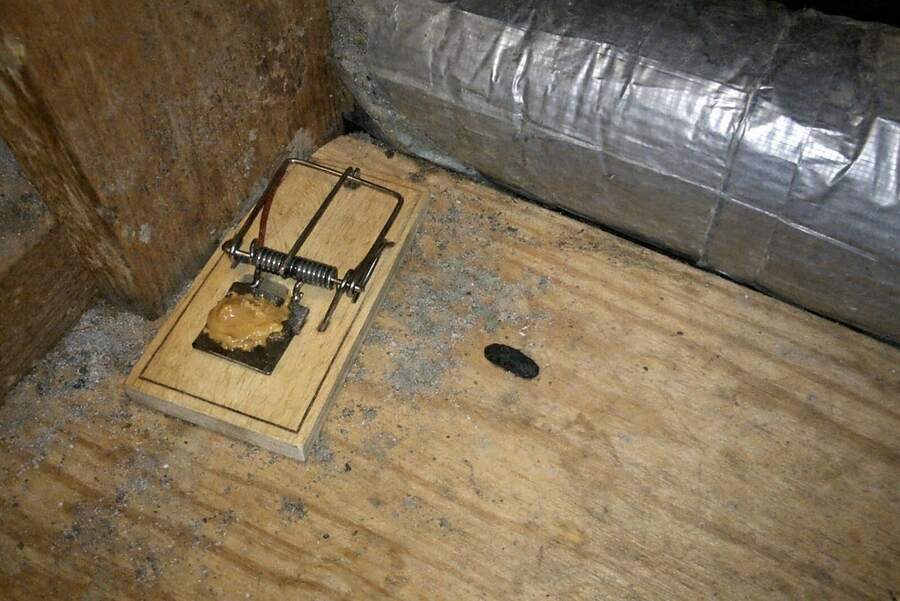
- Snap trapping on the active runs, checked on a schedule and left in place at least a week
- Exclusion of the roofline, the soffit-to-brick joint, vent bases and pipe boots, and the crawl space where there is one (see rodent exclusion)
- Removal of any carcass found during the work, priced as its own line
- A cleanup recommendation for the attic where the insulation is soiled, handled under attic cleanup
- A closure list naming each opening and the material used
Most people who call have been awake for a week listening to it, and half of them have been told by someone that it is probably nothing. The sound above a bedroom ceiling at 2 am is a real animal, and getting the house back is the point of the work.
Work out roughly what this job costs in Houston
Six questions, using the published Houston and national cost bands further down the page. The range is wide on purpose: the number of openings is the biggest variable and nobody can count them from a form.
Bands come from Angi's Houston cost page and HomeGuide's 2026 national guides. Every figure is confirmed at the free inspection.
Roof rats in the attic, Norway rats at the slab
Houston has two rats and they live at opposite ends of the house: the roof rat is the attic species and the Norway rat is the ground species. Knowing which one is in the building decides where the sealing happens, which is why the inspection starts with droppings and location before anything is quoted.
The roof rat
The roof rat is the animal in almost every Houston attic call. UF/IFAS Extension describes it as arboreal: it travels along branches, wires and trunks, and it reaches a roofline from a mature live oak, a fruit tree, a fence top, a vine or a utility drop. Its droppings run a quarter to half an inch long, banana shaped with pointed ends, and they collect along attic joists and the top plate of walls. UF/IFAS also notes the species will range about 150 yards from its den, so the rats in a Montrose attic may be denning three houses down. The reproduction figures explain why waiting is expensive: sexual maturity at 3 to 4 months, a gestation of 21 to 23 days, litters of 5 to 8 and 4 or 5 litters a year, all from the same extension source.
The Norway rat
The Norway rat is heavier, burrows, and stays low. In Houston it lives along the bayou banks, in storm drains and sewers, under slab edges and in the open crawl spaces of pier-and-beam houses. It comes into a garage, a kitchen wall cavity or a crawl space from ground level. The bayou corridors, Buffalo, White Oak, Brays, Sims and Greens, act as travel lanes across the city, so a house a block from the water sees Norway rat pressure that a house in a dry subdivision does not.
Telling them apart at the inspection
Location settles most cases before a dropping is measured. Noise overhead at dusk and after dark, droppings on the attic floor and gnawing at a vent base point to the roof rat. Burrows against the foundation, a gnawed garage door corner, droppings behind the water heater or under a pier-and-beam floor point to the Norway rat. Where the evidence is a smaller dropping and activity behind the kitchen kick plates, the animal is usually a mouse, and the mouse removal page covers that job.
Signs of rats in a Houston home
The first sign is nearly always sound: scratching, scampering or gnawing in the ceiling after dark, because roof rats are active at night and the attic is where they nest. Everything after the sound is confirmation, and by the time droppings show up in a kitchen drawer the attic has usually been occupied for weeks.
- Scratching or running overhead at dusk and in the small hours, often loudest above a bedroom or along an outside wall
- Droppings a quarter to half an inch long with pointed ends along attic joists, on top of insulation, in the garage or behind appliances
- Gnaw marks on the rubber boot of a plumbing vent, the plastic base of a mushroom vent, a soffit corner or the weather strip on the garage door
- Grease rub marks along a fascia board, a rafter or a pipe where the animal runs the same route nightly
- Tunnels and flattened runs through blown insulation, and nesting pulled together from cellulose, paper and fabric
- A musky odor in a closet or hallway under the attic, or a stronger smell that means something has died in a wall
- Chewed wiring insulation in the attic, which is a fire concern in its own right; UF/IFAS notes that rats chew through wires and can potentially start fires
- A pet fixated on one wall or one spot on the ceiling
One or two of these together is enough to book the inspection. Waiting for all of them means waiting through another breeding cycle.
Trapping, rodenticide and sealing compared
Sealing plus snap trapping is the method that ends a Houston rat problem, and rodenticide inside a house is the method that creates the next call. The comparison below is the one a homeowner needs before reading a quote, because a cheap plan is usually a poison-only plan with nothing sealed.
| Method | What it does | Where it fails |
|---|---|---|
| Exclusion (sealing) | Closes every opening a quarter inch or larger with steel mesh, sheet metal and mortar, so the population inside is the last one | Sealing alone traps animals inside; it must run alongside trapping |
| Snap trapping | Kills quickly, leaves a carcass that can be removed, and gives a count of what was inside | Without sealing, new rats replace the caught ones and the trapping goes on for months |
| Rodenticide bait | Kills over days; the EPA notes most rodenticides are anticoagulants and death typically follows 4 days to 2 weeks after feeding begins | The animal dies wherever it is, often inside a wall or under insulation; secondary poisoning risk to pets and owls; requires a TDA license to place for hire |
| Glue boards | Catch mice and juveniles | Adult rats pull free or drag the board; distressing and unreliable |
| Repellents and ultrasonic devices | Nothing measurable | Rats nest beside them |
UF/IFAS makes the case for trapping in one sentence: it reduces the risk of a poisoned rat dying inside a building. The dead-in-the-wall smell is the single most common second call after a bait-only job, and dead rodent removal exists because of it. Steel mesh over expanding foam is the same argument on the sealing side: foam is chewed open in a night, and a quarter-inch galvanized hardware cloth screwed to framing stays closed. The one thing every method shares is the quarter-inch standard. UF/IFAS gives a quarter inch as the gap a mouse can pass and half an inch for a rat, and sets a quarter inch as the rat-proofing figure.
How long does it take to get rid of rats?
A Houston house that is sealed on the first visit is usually quiet within one to two weeks, and a house that is only trapped can stay noisy for months. HomeGuide puts the trapping of a small number of animals at 2 to 3 days and a severe infestation at 1 to 2 months, and the sealing is what pulls a job toward the short end.
The timeline on a routed job runs like this. The inspection and the sealing happen on day one, or the sealing follows within a few days once the quote is approved. Traps stay in place at least a week, because UF/IFAS notes that roof rats are wary of new objects and may walk past a trap for several nights. A return visit checks for fresh droppings and new gnawing, removes any one-way door and closes the last opening. A large two-story attic with a heavy population takes a second round of trapping.
The four-month stories people tell online are almost always trapping-only jobs, or bait-station contracts with monthly visits and no sealing. The animals keep coming because the route in was never closed. If a plan has no sealing line on it, the timeline on that plan is open ended.
What is the cheapest way to get rid of rats?
The cheapest way to get rid of rats is the one that only has to be done once: seal the openings with steel and trap what is inside. A bait-only plan costs less on the first invoice and more over the year, because it comes with monthly visits, a carcass in a wall and the same rats again in the fall.
A homeowner can take real cost out of the job before anyone arrives. Prune the live oak or the fruit tree so no limb reaches within several feet of the roof, and cut back vines and shrubs from the walls. Pick up fallen fruit and pecans. Store pet food and bird seed in metal cans and bring bowls in at night. Replace a torn garage door bottom seal. Fit quarter-inch hardware cloth over a gable vent from inside the attic if it is reachable. Those steps shrink the sealing list and stop feeding the population.
What a homeowner should leave to the contractor is the roofline work: pipe boots, vent bases, the soffit-to-brick joint and roof returns need a ladder and the right metal parts, and a missed opening up there undoes everything below. The free inspection sorts the list into what is yours and what is theirs, and the quote prices only the second half.
What rat removal costs in Houston
Rat exterminator jobs in Houston average about $831 in Angi's Houston cost data, with most homeowners paying $381 to $1,370, and the free inspection turns that band into an itemized number for one house. The table lists typical-job bands, confirmed at the inspection, with the Houston figures labeled Houston (Angi) and the national figures labeled national (HomeGuide 2026).
| Line item | Houston (Angi) | National (HomeGuide 2026) |
|---|---|---|
| Inspection | $100 to $200 elsewhere; free here | $0 to $175; free here |
| Trapping and removal | $381 to $1,370 typical, about $831 average | $250 to $1,200 |
| Follow-up visits | $50 to $150 each | Included in some quotes; ask |
| Exclusion sealing | $430 to $1,300 | $500 to $2,500 |
| Dead rodent removal | Quoted at inspection | $150 to $500 |
| Attic cleanup and decontamination | Quoted at inspection | $600 to $2,500 |
| Insulation removal and replacement | Quoted at inspection | $2.50 to $5.50 per sq ft |
What moves a quote inside the band is the roofline and the population. A single-story slab ranch in Spring Branch with two cracked vent bases and light droppings sits at the bottom. A two-story Memorial house under pines and oaks with four roof returns open, a chewed pipe boot on each slope and a heavy dropping load in cellulose sits at the top, and the cleanup is a separate decision. A pier-and-beam bungalow in the Heights adds crawl-space skirting to the sealing line. The cost estimator above assembles a conservative band from the same published figures using your square footage, foundation type, where the activity is and how long it has been going on, and it prefills the form with the result. Every band above is the published table the estimator draws from; the inspection is what confirms it.
Rat removal on Houston housing stock
Houston rat jobs split by the age of the house, because a pre-1970 pier-and-beam bungalow inside the Loop and a post-1970 slab home in the suburbs are entered from different places and sealed with different work. The climate, the trees, the bayous and the storms sit on top of that split.
Inner-loop bungalows on piers
Houston Heights was platted in 1891, and the Heights, Woodland Heights, Montrose, Eastwood, Garden Oaks and Oak Forest are largely Craftsman bungalows and cottages on pier-and-beam foundations, with open crawl spaces and soffit transitions that were never fully sealed. Post-war Meyerland and Bellaire add a second layer of the same construction. Those houses take Norway rats from below through the skirting and roof rats from above off the live oaks. Both halves of the house get sealed on a routed job. The Houston Heights and Montrose pages go into the housing.
Slab subdivisions and the brick weep gap
Spring Branch, Memorial, Katy, Sugar Land, Pearland, Cypress and The Woodlands are mostly slab-on-grade, so there is no crawl space to enter and the pressure moves to the roofline, the gap between the brick veneer and the wall sheathing, the soffit-to-brick joint, garage corners and utility penetrations. The rat that gets into a Katy attic almost always went up the brick or a downspout and in at the eave.
Roof vents and pipe boots
Composition shingle on gable and hip roofs dominates the region, and the attics are vented with soffit, gable, ridge and mushroom or turbine vents because of the heat. Houston UV and heat degrade rubber pipe boots and plastic vent bases within a few years, and mushroom vents develop cracked seals. Those, with roof returns and fascia gaps, are the openings a roof rat uses most, and they are why the inspection is done from a ladder.
Season, humidity and storms
Rats breed year-round here; the mild winters mean there is no die-off. Calls still peak from October to December, when night temperatures drop and rats commit to indoor nesting. Gulf humidity, around 73 percent on average, keeps cellulose insulation damp once it is soiled, which is why cleanup after a heavy infestation often means removal. Flooding pushes rats out of burrows and storm drains into garages and attics; after Hurricane Harvey in 2017, Houston pest firms reported to local news that rodents had moved into attics in numbers they had never seen. The CDC reports leptospirosis rising after hurricanes and floods, counts rodents among the reservoirs, and puts rodent control on its post-flood list. A post-storm rodent inspection exists for the weeks after a Beryl or a Harvey.
Licensing in Texas
Controlling rats and mice for hire is regulated by the Texas Department of Agriculture, Structural Pest Control Service. A business needs a TDA license with a TPCL number, displayed on its vehicles, and a certified applicator; the pest control category names rats and mice explicitly. Since June 2009, live-trapping only, with no bait and no pesticide, has been exempt under Occupations Code Sec. 1951.058, but anyone placing rodenticide needs the license. Every contractor we route holds the TDA license the job needs, and TDA's own consumer flyer on rodent control tells homeowners to ask for credentials and check the license status before signing anything.
What to check on the contractor before the work starts
A rat removal quote should carry a TPCL number, separate lines for sealing, trapping, return visits and cleanup, a written warranty term to ask about, and a stated number of follow-ups, and a quote missing those is a quote to compare against another one. Run the list before the ladder goes up.
- Ask for the TPCL number and confirm it with the Texas Department of Agriculture before work starts. If the plan includes any bait, the license is mandatory.
- Ask which openings were found and whether each is on the quote with the material beside it. Steel mesh and sheet metal are the answer; foam and steel wool are the warning.
- Ask how many follow-up visits are included and what each extra one costs. Houston follow-ups run $50 to $150 in Angi's data.
- Ask what the warranty covers and for how long, whether it renews, and what happens if rats come back inside the term. Terms vary by contractor, and the answer belongs in writing.
- Ask whether any monthly monitoring plan is folded into the price.
- Ask whether cleanup and decontamination are quoted or recommended, and whether the insulation stays.
The about page explains what the routed contractors are expected to put in writing, and the contact page has the line and the form. The phone is answered 24 hours a day.
Services that usually go with this one
Most Houston jobs run as a sequence, and these pages describe the steps on either side of this one.
- Rodent Exclusion: Closing the roofline, brick weeps, vent boots and crawl-space skirting in steel and metal.
- Attic Cleanup and Decontamination: Removing droppings, nests and urine-soaked insulation, then sanitizing the attic.
- Dead Rodent Removal: Locating the carcass behind the smell, removing it, and closing the route it used.
How the pieces fit together is covered on the about page, or by phone at any hour.
Roof rats and sewer rats
Where each one comes from, and what stops it.
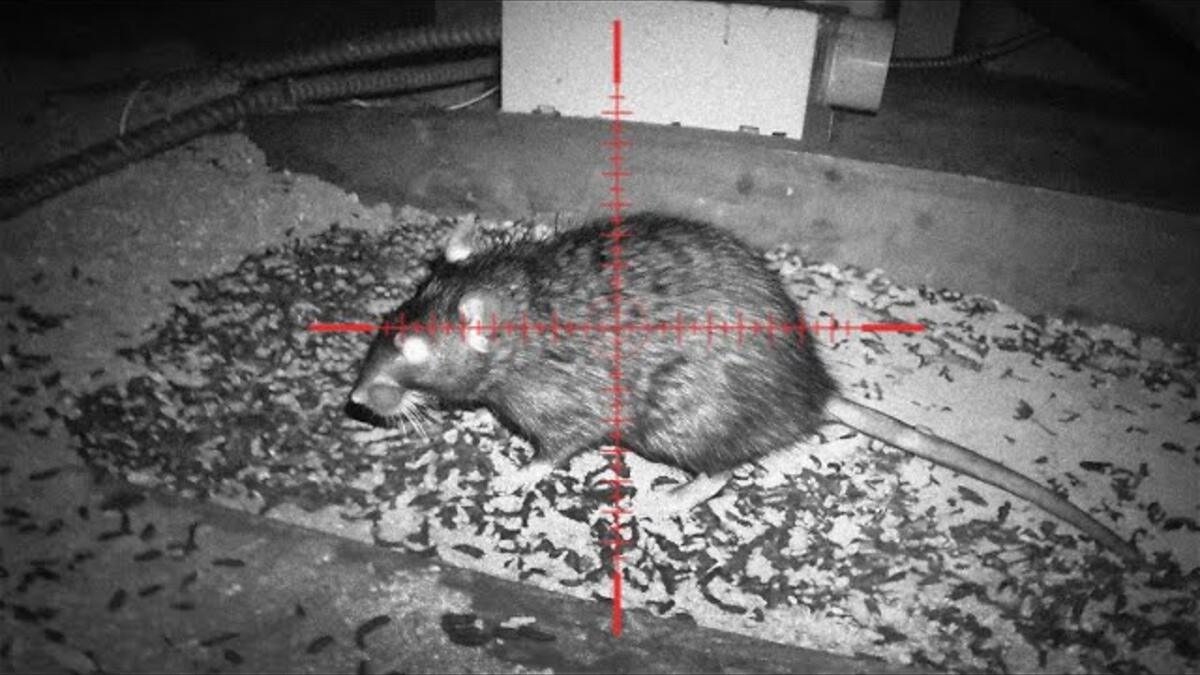
Video: The fastest way to get rid of roof and sewer rats, from Twin Home Experts.
How a rat removal job runs in Houston
The sealing is the spine of the job, and the trapping and the return visit are built around it.
-
Free inspection, attic to slab
Whoever attends reads the attic for droppings and runs, walks the roofline from a ladder, and checks the crawl space or slab edge. The species, the openings and the quote come back in separate lines.
-
Seal the openings
Pipe boots, vent bases, roof returns, the soffit-to-brick joint and any crawl-space gap are closed with steel mesh, sheet metal and mortar, measured against a quarter inch. One known entry may be left with a one-way door.
-
Trap what is inside
Snap traps go on the marked runs the same day and stay at least a week. Bait inside the house is off the plan.
-
Return visit and record
Fresh droppings and new gnawing are checked, the last opening is closed, and you receive a list of every closure with the material used.
Why Houston homeowners route rat removal through us
Three things separate a job that ends from a job that repeats.
-
Sealed to a quarter inch, in steel
The contractor we route measures every opening against the quarter-inch figure UF/IFAS Extension gives as the rat-proofing standard and closes it with galvanized hardware cloth, sheet metal or mortar. Foam is a backing behind metal and nothing more. On a Houston roof that means the pipe boots, the vent bases, the roof returns and the soffit-to-brick joint get metal, and the closure list names the material at each one, so a second contractor could check it a year later.
UF/IFAS: a quarter inch is the rat-proofing standard
-
Trapping inside, no bait in the house
Rats in a routed Houston job are snap trapped so the carcass comes out of the building. The EPA notes that most rodenticides are anticoagulants and that death typically comes 4 days to 2 weeks after the animal starts feeding, which is long enough to die under the insulation or inside a wall. UF/IFAS states the same point from the other side: trapping reduces the risk of a poisoned rat dying inside a building. The dead-in-the-wall call is the one this approach is built to avoid.
EPA: anticoagulant rodenticides kill 4 days to 2 weeks after feeding begins
-
Priced in Houston figures, line by line
Rat removal in Houston averages about $831 with most homeowners paying $381 to $1,370 in Angi's Houston data, and a routed quote puts trapping, sealing, follow-ups and cleanup on separate lines so it can be set beside another bid. The inspection that produces it is free, where a standalone inspection runs $100 to $200 elsewhere in the city. Homeowners in forums describe quotes for similar work that vary by a factor of ten with no way to tell why. An itemized quote is the answer.
Angi Houston: rat exterminator jobs $381 to $1,370, about $831 average
What Reddit Says About Rat Removal in Houston
Homeowner threads on r/pestcontrol, r/HomeImprovement and r/homeowners treat a single rat removal quote as unreadable and tell each other to get several bids for the same scope. The advice repeats: insist the quote is broken into trapping, sealing and cleanup as separate programs, ask whether the company does the sealing itself or only sets traps, and prefer a local operator to a national brand. Inspection fees just to get a bid come up as a real barrier, which is why a free inspection matters to people.
The red flags are consistent. A poison-only plan with nothing sealed draws the most criticism of anything in the corpus, and the claim that poison makes rats thirsty so they go outside to die is called out as a myth used by dishonest sellers. Trapping with no sealing is described as harvesting rodents. Sealing with animals still inside gets the same warning from the other direction. People also warn about quotes that bury a long monitoring contract inside the removal price, and about companies that keep coming back for months with nothing changing.
The questions they pass around are practical. What exactly is included, and what is a separate line? Is the sealing warrantied, and does the warranty renew or end? Will you clean up and decontaminate, or only trap? How many follow-up visits are included? What happens if they come back? Species confusion appears too: one thread has two exterminators disagreeing over whether the animal is a young roof rat or a mouse, which is a reminder to ask how the identification was made.
Under the technical talk the register is the same in every thread: broken sleep, a house that feels different, and friends who think the homeowner is overreacting. People describe lying awake for the scratching. It is a real animal, and they are right to call.
The contractors we route quote sealing, trapping and cleanup as separate lines, name the species, and answer the warranty question in writing before the work starts.
A typical rat removal call in Houston
The situation: A couple in a single-story post-war house in Meyerland, a few streets from Brays Bayou, has been hearing running above the bedroom ceiling every night since the first cool spell in late October. A live oak in the back yard reaches over the rear slope of the roof. They put bait blocks in the attic from a hardware store, the noise stopped for ten days, a smell arrived in the hallway, and then the running came back. Neither of them has slept through a night in three weeks.
What gets done: Whoever attends finds roof rat droppings, a quarter to half an inch long with pointed ends, along the joists above the hallway, a rubber pipe boot on the rear slope cracked open by the sun and chewed wider, a mushroom vent with a split base, and a soffit return at the rear corner left open at construction. The three openings are closed with galvanized quarter-inch hardware cloth and sheet metal, with a one-way door held at the pipe boot for the first week. Snap traps go on the dropping run the same afternoon. The carcass from the bait is located under the insulation near the hallway and removed as its own line. The oak limb over the roof is written up for pruning.
How it turns out: The traps take three adults in the first four nights and then nothing. The return visit finds no fresh droppings, the one-way door comes out and the boot is closed for good, and the couple receives a closure list naming the boot, the vent and the return with the material at each. The smell is gone with the carcass. The insulation above the hallway is flagged for cleanup as a separate decision.
Rat removal questions from Houston homeowners
The questions below come from the phone line and from homeowner threads about rats.
The animal and the risk
Are the rats in my attic dangerous to my family?
Rats in an attic are a health concern and a fire concern, and both are reasons to act instead of waiting. The CDC says rodents carry many diseases, spread directly through contact with urine, droppings, saliva or a bite, and indirectly through fleas, ticks and mites that fed on an infected rodent. UF/IFAS notes that rats chew through wires and can potentially start fires. Hantavirus is the one people search for, and the plain answer is that most US cases are western and the risk in a Houston attic is low; the respirator worn during cleanup is for general contamination from droppings and urine.
Why did the rats show up right after the flood?
Flooding pushes rats out of burrows, storm drains and bayou-bank harborage and into the nearest dry structure, which in Houston is a garage or an attic. After Hurricane Harvey, local pest firms told Houston television stations that rodents had moved into attics in numbers they had never seen. Leptospirosis cases climb after hurricanes and floods in the CDC's records, with rodents among the carriers and rodent control among the precautions it recommends afterward. A post-storm inspection of the roofline and the garage is worth booking in the weeks after any flood event, whether or not anything has been heard yet.
Will the rats leave on their own when it warms up?
Houston rats breed all year and there is no winter die-off, so a population that moved into an attic in November is still there in April, and larger. UF/IFAS puts roof rat sexual maturity at 3 to 4 months, gestation at 21 to 23 days and litters at 5 to 8, with 4 or 5 litters a year. The noise may fade in summer as the attic heats up and the animals spend more time outside at night, but the nest, the droppings and the open entry remain. Sealing is what ends it.
The job and the cost
Do I really need the holes sealed now, or can I get away with trapping?
Trapping without sealing is the plan that keeps people trapping into the spring, because the roof rats denning in the oak three houses over use the same pipe boot the last ones did. UF/IFAS puts the species range at about 150 yards from the den, which covers most of a Houston block. Sealing on the first visit is what makes the trapping finite. Where budget is tight, the routed contractor can seal the openings in use first and schedule the rest, but a quote with no sealing line has no end date.
Does homeowners insurance cover rat damage in Texas?
Rodent damage is generally treated as a maintenance issue and excluded by most homeowners policies, so the removal, the sealing and the insulation replacement usually come out of pocket. The exception some policies make is for a sudden covered loss that the rodent damage caused, such as a fire from chewed wiring, and the policy language decides that. Ask your carrier before assuming either way. The itemized quote and the closure list from the routed contractor are the documents an adjuster would ask for.
How quickly can someone come out?
The phone is answered 24 hours a day and the free inspection is booked at the first call. Availability for the inspection and the sealing depends on the contractor routed to the job and on the season; October to December is the busiest stretch in Houston, when night temperatures fall and rats commit to indoor nesting. What a homeowner can do the same night is move pet food and bird seed into metal containers, pull the attic ladder up and note where and when the noise happens, which shortens the inspection.
Still have a question? Call (713) 804-8785 and ask.