
Rodent Exclusion in Houston, TX
Exclusion closes every rodent-sized gap in a Houston house with steel, from the crawl-space skirting under a Heights bungalow to the cracked pipe boots and brick weeps on a Katy slab home. Sealing is what makes the trapping finite, and the inspection is free.
- Quarter-inch closures in steel
- Crawl space and roofline both
- Free inspection, itemized sealing quote
What rodent exclusion in Houston includes
Rodent exclusion in Houston means finding each gap a rodent can use, closing it with a material rodents cannot chew, and handing the homeowner a list of what was closed and with what. A slab house gets a roofline-and-brick job. A pier-and-beam house gets that job plus the crawl space underneath.
The work happens from a ladder, from inside the attic and, on the older stock, from under the floor. Whoever attends closes each gap from the outside wherever the framing allows, then records it with the material so a homeowner can look at the list and a second contractor could verify it later. Trapping runs at the same time so the animals inside come out; the rat removal page describes that side of the job.
- A free look at the attic, the roofline, the brick, the garage and any crawl space before a number is quoted (see rodent inspection)
- Quarter-inch galvanized hardware cloth behind soffit vents, inside gable louvers, under ridge vent ends and across open roof returns
- Metal-collared replacements for sun-cracked pipe boots, and hardware-cloth liners inside split mushroom and turbine vent bases
- A metal strip or hardware cloth along the soffit-to-brick joint and over chewed fascia
- Stainless mesh inserts in the brick weep holes on any wall showing rub marks or droppings, so the veneer still drains
- Mortar packed around a metal collar where the AC line set, cable, service mast and plumbing pass through the wall
- Hardware cloth over crawl-space vents and skirting gaps, and collars at the drain and supply lines through the subfloor, on pier-and-beam houses
- A replacement bottom or side seal on the garage door wherever a corner shows daylight
- A closure list, item by item, with the material named at each
By the time someone calls about sealing they have usually spent weeks awake with the ceiling, and often a friend has suggested they are overreacting. Closing the building is the step that ends the listening.
Work out roughly what this job costs in Houston
Six questions, using the published Houston and national cost bands further down the page. The range is wide on purpose: the number of openings is the biggest variable and nobody can count them from a form.
Bands come from Angi's Houston cost page and HomeGuide's 2026 national guides. Every figure is confirmed at the free inspection.
Where rodents get into a Houston house
A Houston house is entered in four places: at the roofline, through the brick veneer, at ground level around the garage and the utilities, and, on pier-and-beam stock, through the crawl space. Each row in the table is measured against the same figure: UF/IFAS Extension sets the rat-proofing standard at a quarter of an inch, since a mouse squeezes through a quarter-inch gap and a rat through a half-inch one.
| Opening | Why it is open in Houston | The closure |
|---|---|---|
| Rubber pipe boot | UV and heat split the rubber collar on a plumbing vent inside a few years, and a roof rat gnaws the split into a hole | A new boot with a metal collar, or sheet metal and hardware cloth fitted around the pipe |
| Mushroom and turbine vent | Plastic bases crack, seals fail in the heat, and the screen inside a turbine rusts out | Hardware cloth liner screwed to the deck inside the base; a metal unit where the base is beyond repair |
| Roof return and fascia | The pocket where a soffit turns a corner into a roof slope is commonly left open by the framer; fascia boards shrink away from the deck | Hardware cloth cut to the pocket and fastened to wood; sheet metal over chewed fascia |
| Soffit-to-brick joint | The soffit panel ends short of the brick face and leaves a slot along the whole wall | A sheet-metal strip or hardware cloth run the length of the joint |
| Brick weep gap | The air space between veneer and sheathing opens at the weep holes on the bottom course and again at the top of the veneer under the soffit | Stainless weep inserts below; hardware cloth at the top of the veneer |
| Gable, soffit and ridge vents | Thin wire and plastic screens rust or are chewed; ridge vent ends are often unfinished | Hardware cloth inside the louver or under the cap; metal end caps |
| Utility penetrations | Line set, cable, service mast and plumbing come through the wall in holes far larger than the pipe | Mortar around a metal collar; hardware cloth behind any patch |
| Garage door | Bottom and side seals shrink, crack and get chewed; the corner nearest the driveway goes first | A new seal and threshold, plus the garage-to-attic panel gap closed above |
| Crawl space | Skirting rots, vents lose their screens, and drain and supply lines pass through the subfloor with daylight around them | Hardware cloth over skirting gaps and vents; metal collars or hardware cloth at each floor penetration |
Trees decide which rows carry the most weight on a given house. UF/IFAS calls the roof rat arboreal, an animal that moves along limbs, wires and trunks, so a live oak or a pecan leaning over the roof makes every roofline row a live one.
Crawl-space sealing inside the Loop, roofline and brick sealing in the suburbs
Houston exclusion is two different jobs depending on when the house was built: pre-1970 pier-and-beam homes inside the Loop are sealed from below as well as above, and post-1970 slab homes in the suburbs are sealed at the roofline and through the brick veneer. The inspection settles which job a house is before anything is priced.
Pier-and-beam houses: sealed from below and above
The Heights was platted in 1891, and it shares its Craftsman bungalow and cottage stock with Woodland Heights, Montrose, Eastwood, Garden Oaks and Oak Forest: wood-framed houses on piers, with open crawl spaces and soffit transitions that no builder ever finished sealing. Post-war Meyerland and Bellaire were framed the same way. Norway rats enter from below, through rotten or missing skirting, unscreened crawl-space vents, and the gaps around drain and supply lines where they rise through the subfloor under kitchens and bathrooms. Roof rats enter from above, dropping off the live oaks onto a wood soffit with open returns and old gable louvers. A routed job on one of these houses closes both ends: hardware cloth screwed over every skirting gap and vent, metal collars at the floor penetrations, and the roofline work covered elsewhere on the page. Leaving the crawl space off the list is the usual reason a sealing job fails in the Heights. The Houston Heights page goes further into the stock.
Slab houses: the roofline and the brick weep
Spring Branch, Memorial, Katy, Sugar Land, Pearland, Cypress and The Woodlands were mostly built slab-on-grade with brick veneer, so there is no underside to seal and the pressure moves up and out. The list becomes the pipe boots and vent bases on the roof, the roof returns, the soffit-to-brick joint, and the air gap between the brick and the sheathing, which is open at the weep holes along the bottom course and again where the veneer stops under the soffit. Garage corners and the utility penetrations close out the list. On a Sugar Land house a rat climbs the brick or a downspout and enters at the eave; a mouse walks in at a weep. The closures are hardware cloth and sheet metal at the roofline and stainless inserts at the weeps, which keep the wall draining while shutting the gap. The Spring Branch and Sugar Land pages cover those areas.
What the split means at quote time
A pier-and-beam quote carries a crawl-space line and a slab quote carries a weep line, and a quote with neither on a house that needs one has missed half the building.
Steel mesh and sheet metal against expanding foam
Exclusion material has to survive two things, a rat's teeth and Gulf weather, and the materials that pass are galvanized hardware cloth, sheet metal, mortar around a metal collar, and stainless inserts at the weeps. Expanding foam by itself fails the teeth test. A quote written around foam and steel wool is a quote for a job that will be done a second time.
| Material | Used at | Performance in Houston |
|---|---|---|
| Quarter-inch galvanized hardware cloth | Roof returns, vent louvers, vent bases, the soffit-to-brick joint, crawl-space vents and skirting gaps | Chew-proof at that mesh size; the zinc coating shrugs off the humidity; air still moves through it |
| Sheet metal, galvanized or aluminum | Chewed fascia and soffit corners, the strip along the soffit-to-brick joint, ridge vent end caps | Rigid and chew-proof; screwed to framing it holds through a Gulf wind |
| Metal-collared pipe boot | Where a rubber plumbing-vent boot has cracked | The collar is the part a rat cannot open, and it outlasts rubber under Houston sun |
| Stainless weep inserts | Brick weep holes on any wall in use | Stops mice and rats, lets water and air out, will not rust |
| Mortar around a metal collar | Line set, cable, mast and plumbing penetrations through brick or siding | Permanent; blends with the wall; no shrinkage |
| Expanding foam | Behind metal only, as an air block | Exposed, it is chewed through overnight, crumbles in sun and conceals the hole from the next inspection |
| Steel wool alone | Nowhere outdoors | Rusts away in one Houston summer |
Copper and stainless mesh match galvanized hardware cloth for chew resistance at a higher price, and they are worth it on the coast in Galveston County. Fastening matters more than the metal: mesh glued across a hole is still a hole, and mesh screwed into framing is a closure.
Do the chewed openings have to be repaired now, or will trapping alone hold for a while?
The chew-ins need closing now, because a trap line under an open hole catches this week's rats and then next week's from the oak down the street, and the catching never stops. UF/IFAS puts the roof rat's foraging range at roughly 150 yards from the den, which takes in most of a Houston block, and the same source gives 4 or 5 litters a year of 5 to 8 pups each, so the supply outside is renewed faster than any trap line takes it down.
The safe order is sealing and trapping together. Every gap is closed, or every gap but one main entry, which gets a one-way door, and snap traps go along the dropping runs that afternoon. Roof rats are wary of anything new, UF/IFAS notes, so the traps stay at least a week. A follow-up visit confirms the attic has gone quiet, pulls the one-way door and finishes the last closure. The one unsafe order is closing the house and leaving, because a rat cut off from its route chews a fresh one, usually down into a wall or into the soffit box over the kitchen cabinets.
When the budget forces a choice, the routed contractor can close the gaps in active use first and schedule the remainder, which beats trapping alone. A plan with a trapping line and no sealing line has no finish date.
What keeps rats away permanently?
A closed building keeps rats out of a Houston house for as long as the closures last, and no spray, plug-in device or cat can substitute for it. Repellents and ultrasonic units have no measured effect on rodents. A cat is beaten by an animal that comes down a tree onto the roof and never touches the yard.
Four habits make an exclusion job last. Keep the live oaks, pecans and fruit trees trimmed back several feet from the roof and strip vines off the walls, since limbs, wires and trunks are the roof rat's highways in the UF/IFAS description. Keep bird seed, pet food and fallen fruit off the ground. Walk the roofline after any named storm, because wind lifts soffit panels and opens returns, and high water drives rats off the bayou banks and out of the storm drains into garages and attics; the CDC links post-hurricane and post-flood rises in leptospirosis to rodents among other reservoirs, and advises rodent control as part of flood recovery. Replace a garage door seal the season it tears, because that corner is the most gnawed spot on a Houston house.
Pipe boots and vent bases deserve a look every couple of years, since the sun that split the originals is working on the replacements. The post-storm rodent inspection covers the roofline walk after a storm like Beryl.
What rodent exclusion costs in Houston
Exclusion work in Houston prices at $430 to $1,300 in Angi's Houston data, while HomeGuide's 2026 national figure for a full-home seal is $500 to $2,500, and the free inspection converts those bands into a line-item number for one house. Treat the table as typical-job ranges to budget against, confirmed at the inspection, with Houston figures labeled Houston (Angi) and national figures labeled national (HomeGuide 2026).
| Line item | Houston (Angi) | National (HomeGuide 2026) |
|---|---|---|
| Exclusion sealing | $430 to $1,300 | $500 to $2,500 full home |
| Trapping and removal alongside | $381 to $1,370, about $831 average | $250 to $1,200 |
| Follow-up visits | $50 to $150 each | Included in some quotes; ask |
| Inspection | $100 to $200 elsewhere; free here | $0 to $175; free here |
| Attic cleanup after sealing | Quoted at inspection | $600 to $2,500 |
| Insulation removal and replacement | Quoted at inspection | $2.50 to $5.50 per sq ft |
House type and roof size move a sealing quote inside the band. A one-story slab ranch in Spring Branch with two split vent bases and a garage seal lands near the bottom. A two-story Memorial house under pines with four open roof returns, a cracked boot on each slope, a long soffit-to-brick joint and six penetrations lands near the top. A Heights bungalow adds the crawl-space line, and a house beside Brays Bayou may need the Norway rat side handled as well as the roof. Heavy canopy adds ladder time and a pruning list. The cost estimator above builds a conservative band from these same published figures using square footage, foundation type, where the activity is and how long it has gone on, then prefills the form with the result. The table above is the source the estimator works from, and the inspection is what confirms the number.
Exclusion in Houston's climate and construction
Vented attics under composition shingle, a live oak canopy, Gulf humidity, breeding that never pauses, floods, and a state license on the trapping side all shape what a Houston exclusion job seals and how. Each one changes a line on the closure list.
Vented attics and the parts that wear out
Gable and hip roofs under composition shingle are the regional norm, vented through soffit, gable, ridge and mushroom or turbine vents because of the heat. Sun and heat wear out rubber pipe boots and plastic vent bases inside a few years, and mushroom vents develop cracked seals, so the openings a roof rat uses most are manufactured parts that have aged out. The closures have to leave the vents breathing: a Houston attic needs its airflow through the summer, and hardware cloth passes air where foam blocks it.
Canopy and bayous
Mature live oaks, pecans and fruit trees carry roof rats to the eave in every older neighborhood, and utility drops do the same in the newer ones. At ground level the bayou corridors, Buffalo, White Oak, Brays, Sims and Greens, move Norway rats across the city, so a house near any of them gets the crawl space, the slab edge and the garage inspected as carefully as the roof.
Humidity, season and storms
Relative humidity averaging around 73 percent, and close to 90 percent at dawn, is why steel wool is off the material list and galvanized or stainless mesh is on it. It is also why soiled cellulose insulation tends to be replaced after the sealing; the attic insulation replacement page covers that decision. Rodents breed here twelve months a year with no winter die-off, and the calls still peak from October to December once night temperatures fall and rats settle indoors. High water pushes rats out of low harborage into garages and attics: after Hurricane Harvey in 2017, Houston pest firms reported to local news that rodents had moved into attics in numbers they had never seen, and Hurricane Beryl in July 2024 is the recent wind event that lifted soffits and dropped limbs across the west side. A sealing job done in spring deserves a roofline check once hurricane season ends.
Licensing for the sealing work
Sealing by itself is carpentry, and the trapping that accompanies it is regulated. Controlling rats and mice for hire requires a Texas Department of Agriculture license through the Structural Pest Control Service, with a TPCL number on the vehicle and a certified applicator, and the pest control category names rats and mice. Since June 2009, live-trapping with no bait has been exempt under Occupations Code Sec. 1951.058; placing rodenticide still requires the license. Every contractor we route holds the TDA license the job needs. TDA's own consumer flyer on rodent control tells homeowners to ask for the credentials and verify the license status before signing, and asking for the TPCL number and confirming it with the Texas Department of Agriculture before work starts is the way to do that.
What to ask about the exclusion quote and its warranty
A sealing quote worth accepting lists the openings, names a material at each, states the number of return visits and puts the warranty answer in writing; a contractor who cannot produce those four things is pricing foam. Get the answers before anyone climbs a ladder.
- Which gaps did you find, and does each appear on the quote with its material? On a bungalow, is the crawl space listed; on a brick slab house, are the weeps?
- Does the sealing carry a warranty, for what term, and does the term renew or expire?
- If rats get back in during the warranty, what happens: a reseal, a trapping visit, both or neither?
- Are the trapping and the return visit inside this number or on separate lines?
- Has a monthly monitoring plan been rolled into the price?
- What is the TPCL number, and will any bait be placed?
Warranty terms differ from one contractor to the next, and what the warranty covers and whether it is written down count for more than its length. Put the same six questions to every bidder. The about page sets out what the routed contractors are expected to document, and the contact page carries the number and the form. Someone answers the phone 24 hours a day.
Services that usually go with this one
Most Houston jobs run as a sequence, and these pages describe the steps on either side of this one.
- Rat Removal: Trapping roof rats out of the attic and Norway rats out of the crawl space, sequenced with sealing.
- Rodent Inspection: A free walk of the roofline, attic, crawl space and yard that ends in a written, itemized report.
- Attic Insulation Replacement: Taking out contaminated cellulose or fiberglass and blowing in fresh material.
How the pieces fit together is covered on the about page, or by phone at any hour.
Which mesh actually lasts
Three materials compared at the same gap.
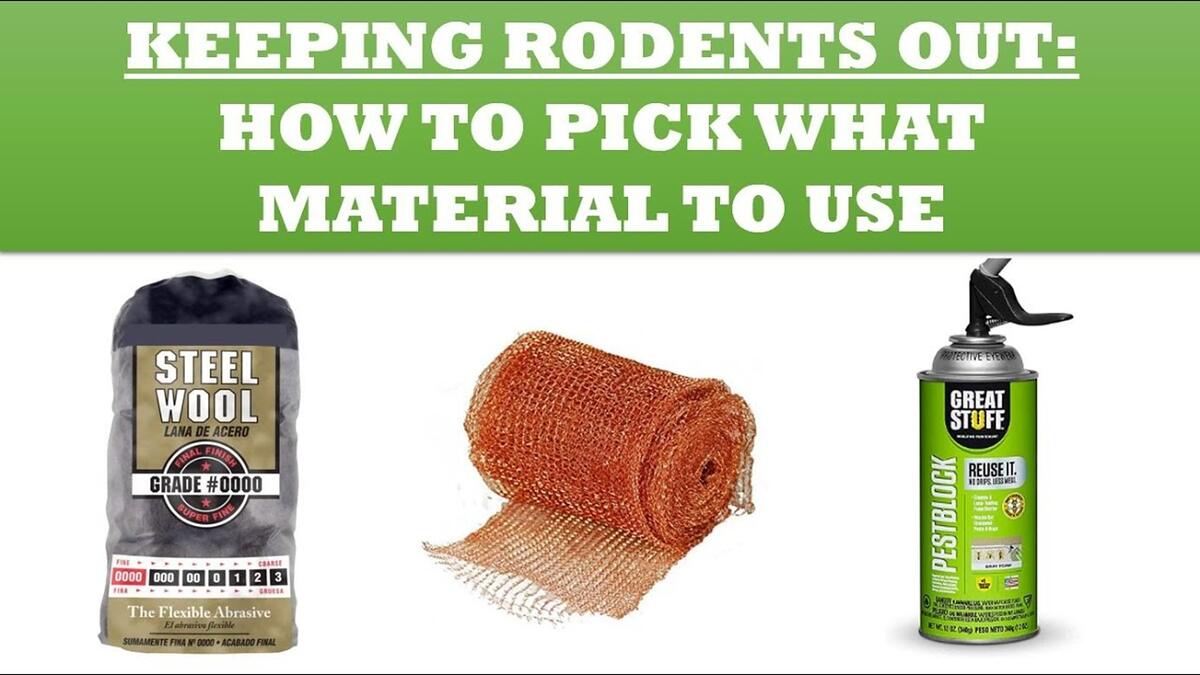
Video: Steel wool vs copper mesh vs green mesh, from If I Can Do It You Can Too.
How an exclusion job runs in Houston
Closing the building comes first, and the trapping and the follow-up are arranged around it.
-
Inspection, roof to crawl space
Whoever attends walks the eaves from a ladder, follows the dropping runs through the attic, and checks the brick, the garage and, under a pier-and-beam house, the crawl space. The gaps and the price come back itemized.
-
Seal in steel
Pipe boots, vent bases, roof returns, the soffit-to-brick joint, the weeps, the penetrations, the garage seal and any crawl-space gap are closed with hardware cloth, sheet metal, mortar and weep inserts, each checked against a quarter inch.
-
Trap inside that afternoon
Snap traps go along the runs while the building is being closed, so nothing inside is pushed into chewing a fresh exit. They stay down for a week at minimum.
-
Follow-up and closure list
Fresh droppings and new gnawing are checked for, the one-way door comes out and its gap is closed, and the homeowner gets the itemized list of closures with the material at each.
Why Houston homeowners route exclusion work through us
Three things separate a seal that holds from one chewed open by spring.
-
Steel at every gap, checked against a quarter inch
Galvanized hardware cloth, sheet metal, mortar around metal collars and stainless weep inserts are what the contractor we route uses, and each opening is checked against the quarter-inch figure that UF/IFAS Extension sets as the rat-proofing standard. Foam goes behind metal as an air block and nowhere else. A year on, the foam job is open again and the metal job is closed, which is why the closure list records the material beside every item.
UF/IFAS: a quarter inch is the rat-proofing standard; mouse quarter inch, rat half inch
-
Both halves of a Houston house
A pier-and-beam bungalow in the Heights gets sealed underneath as well as overhead, with the skirting, the crawl-space vents and the floor penetrations closed alongside the roofline, while a brick slab house in Katy gets the roofline plus the veneer, with the weeps and the soffit-to-brick joint on the list. Jobs we route are quoted by house type, and that is the line a cheap quote usually leaves off.
Houston Heights platted 1891; the inner-loop bungalow stock is pier-and-beam with open crawl spaces (City of Houston historic preservation manual)
-
Priced in Houston figures, line by line
Angi's Houston data puts exclusion work at $430 to $1,300, and a routed quote lists sealing, trapping, follow-ups and any cleanup separately so it can be compared with another bid on equal terms. The inspection behind it costs nothing. Forum threads are full of sealing quotes for similar houses that differ by a factor of ten with no explanation, and a line-item quote is the cure for that.
Angi Houston: rodent exclusion work $430 to $1,300
What Reddit Says About Rodent Exclusion in Houston
Sealing draws more argument in homeowner threads than any other part of a rodent job, and it usually begins with a price the homeowner could not interpret. The advice on r/pestcontrol and r/HomeImprovement is to collect several bids on the same scope, to make the company price exclusion on its own line apart from trapping and cleanup, and to ask directly whether the firm does its own sealing or hands it to someone else. Local operators get the recommendation over national brands again and again.
The warnings are precise. Trapping without sealing is called harvesting rodents. Sealing while animals are still inside is called the mirror-image mistake. Bait-only plans that never touch the structure are criticized harder than anything else in the threads. People flag quotes that hide a monthly monitoring contract inside the removal price, and firms that return month after month with the same result. On cost, the threads hold quotes for similar sealing work running from under two thousand dollars to tens of thousands, and the question underneath is always whether the homeowner is being cheated.
The questions passed around concern the warranty and the scope. Does the sealing carry a warranty, and does it renew or end after one term? What happens on a return? How many follow-up visits come with the price? Does the company decontaminate, or only seal and trap? One thread walks through a 1920s Craftsman with a low crawl space cured by screening the perimeter, which describes the inner-loop Houston job in a sentence.
Beneath the technical questions the thread is always the same: someone who has not slept and has been told to calm down. Sealing is what lets that person stop listening at night.
The contractors we route price the sealing on its own line, name the material at every gap, and put the warranty answer in writing before starting.
A typical exclusion job on a Houston bungalow
The situation: A couple in a 1920s pier-and-beam bungalow in Woodland Heights has had a company out twice since the fall. The first visit set traps in the attic and caught two roof rats on the live oak side of the roof. The second visit set more traps. A month later there is still running overhead at night, and now there is something under the kitchen floor too. They have been told the house is old and this is what old houses do. They have stopped having people over.
What gets done: Whoever attends finds two jobs on one house. Above, the wood soffit has an open return at the rear corner under the oak, a gable louver with a rusted screen, and a plumbing vent boot split by the sun. Below, the skirting is rotten along the alley side, two crawl-space vents have lost their screens, and the drain line under the kitchen sink comes through the subfloor with an inch of daylight around it. Roof rat droppings run the attic joists; Norway rat droppings and a burrow sit under the kitchen. The return and the louver get quarter-inch hardware cloth, the boot gets a metal-collared replacement, the skirting gaps and vents get hardware cloth screwed to the framing, and the drain penetration gets a metal collar. A one-way door holds at the roof return for the first week. Snap traps go on both runs that day. The oak limb over the roof goes on a pruning note.
How it turns out: The attic traps take two more adults over the first nights and the crawl-space traps take three, then the count stops. At the follow-up there are no fresh droppings above or below, the one-way door comes out and the return is closed, and the couple gets a nine-item closure list with a material at each, filed with the house papers. The attic insulation over the kitchen is flagged for cleanup as a separate decision.
Exclusion questions from Houston homeowners
These come up on the phone and in homeowner threads about sealing.
The sealing itself
Will expanding foam from the hardware store seal the openings if I do it myself?
Foam by itself is chewed open again, often inside a week, and it disguises the hole from whoever inspects next. A homeowner can handle a fair amount at ground level: quarter-inch galvanized hardware cloth screwed into framing, a fresh garage door seal, mortar around a pipe. The roofline is the difficult half, because pipe boots, vent bases, roof returns and the soffit-to-brick joint call for a ladder, the right metal parts and a sense of where a roof rat tests a roof. On a pier-and-beam house the crawl space is harder again. The free inspection sorts the gaps into yours and theirs.
Does sealing the attic vents block the ventilation?
Done correctly, no. Quarter-inch hardware cloth over a gable, soffit or ridge vent lets air through and keeps the animal out, and a hardware-cloth liner inside a mushroom or turbine base does the same job. Stainless weep inserts let water and air out through the brick. Foam sprayed into a soffit or a vent base is what blocks airflow, and that is one more count against it. A Houston attic runs hot from May into October and needs every vent working, so the contractor we route leaves them breathing while closing them to anything a quarter inch or wider.
How long does an exclusion job take?
A slab house in Houston is usually sealed in one visit, with the trapping running a week or two afterward and a follow-up to confirm. A pier-and-beam bungalow with a crawl space to screen, or a big two-story roof with many returns and penetrations, can run to a second day. HomeGuide's figures for the trapping side are 2 to 3 days for a few animals and 1 to 2 months for a severe infestation, and sealing on day one is what holds a Houston job near the short end.
After the work
What should I ask about the warranty on exclusion work, and does it renew?
The contractor doing the sealing sets the warranty, so ask for the term in writing, what it covers and whether it renews. Some cover a reseal and nothing more; some add a trapping visit if animals return; some run a fixed term and stop; some renew for a fee. Settle which before the work begins and have it written on the quote. The closure list handed over at the end is what the warranty attaches to, so file it with the house papers. It is also what a buyer asks for at a sale, which the rodent clearance letters page covers.
What happens if they come back after sealing?
A return after sealing means a gap was missed, a closure was damaged or a storm opened something new, and the first move is a walk of the roofline and the foundation to find out which. Inside the warranty period, the terms you asked about decide whether the reseal and any trapping are covered. Houston roofs take wind from June through November and pipe boots keep aging under the sun, so checking the closures after a storm and every couple of years is a sound habit whether or not anything has been heard.
Still have a question? Call (713) 804-8785 and ask.