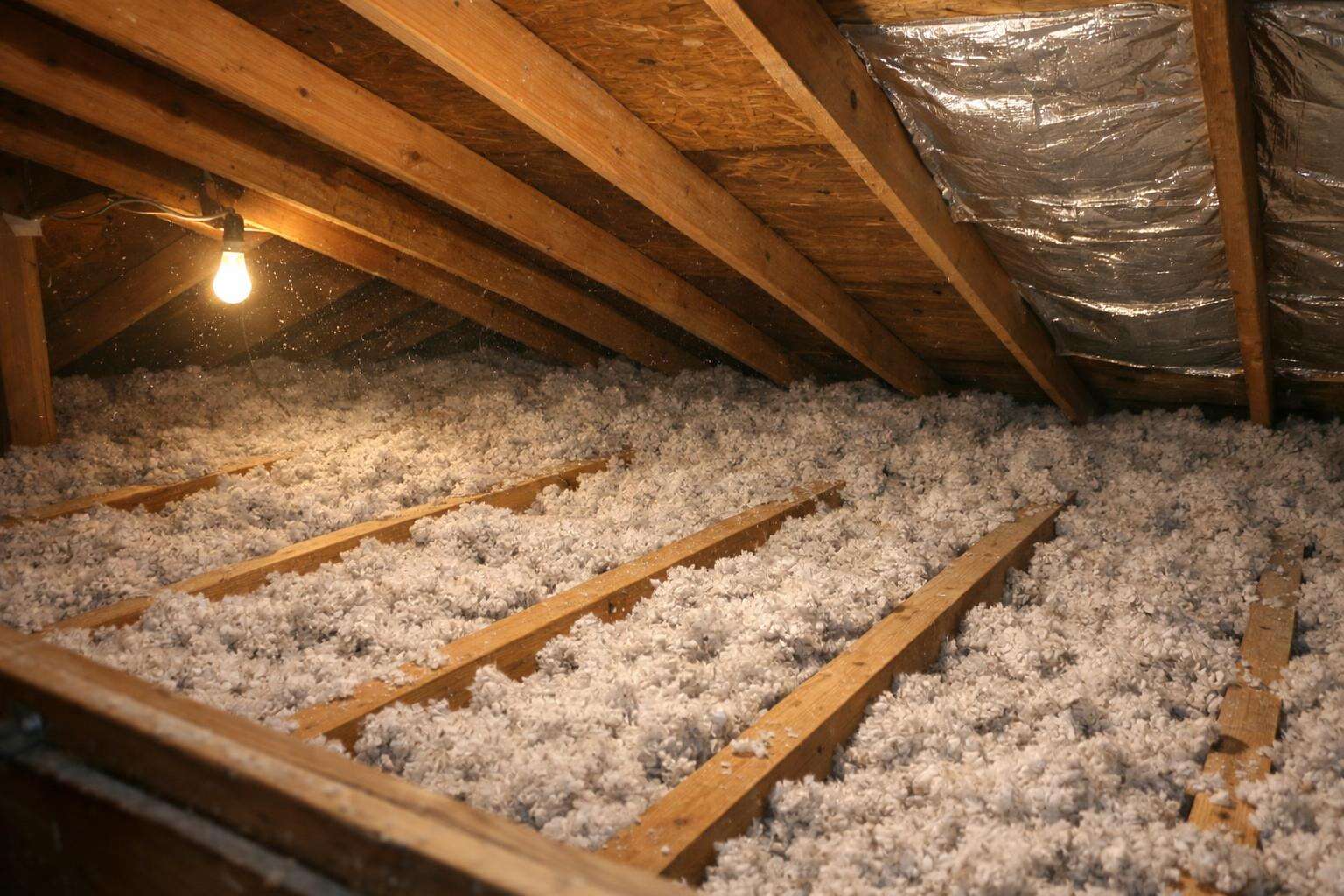
Attic Cleanup and Decontamination in Houston, TX
Attic cleanup in Houston removes what the rats left behind: droppings, urine-soaked insulation, nests and the odor that keeps drawing the next animal in. In Gulf humidity that usually means remove and replace. A licensed contractor handles every job we route.
- Soiled insulation removed
- HEPA vacuum and disinfectant
- Sealing done before cleanup
What attic cleanup and decontamination in Houston includes
Attic cleanup and decontamination in Houston is the removal of contaminated insulation and nesting, the vacuuming of droppings from the attic floor and framing, the disinfection of every surface the animals touched, and the deodorizing that stops the attic smelling like a rat runway to the next one. On most Houston houses it ends with new insulation, because the old cellulose or fiberglass is wet, tunneled and past saving.
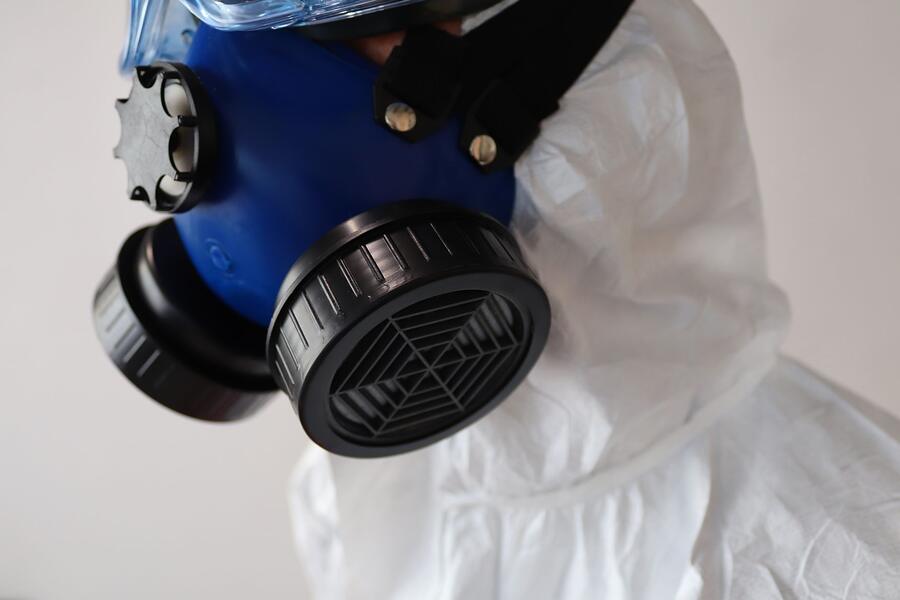
The work happens after the roofline has been sealed and the attic has gone quiet. Cleaning under an open hole is a waste of the money, so the sequence is fixed: exclusion, trapping, then cleanup. Whoever attends works in a suit and respirator with the attic hatch sealed off from the living space and a vacuum hose run out through the hatch or a gable vent.
- Removal of soiled, wet or tunneled insulation by insulation vacuum, bagged and hauled away
- HEPA vacuuming of droppings from joists, top plates, ductwork and the attic floor
- Removal of nests, carcasses and stored food caches
- Application of a disinfectant to framing, decking and duct exterior, then an enzyme or odor neutralizer
- Inspection of duct runs and wiring for chew damage, flagged for the HVAC contractor and electrician
- Replacement of the insulation, blown fiberglass or cellulose, with any radiant barrier checked and reattached
- A written record of what was removed, what was applied and the finished insulation depth
The attic is the one room of the house most people have never seen, which is why finding out what is up there lands so hard. Being told the noise was nothing and then seeing the tunnels in the insulation is a common story on the phone. The cleanup is where the house gets handed back.
Signs the attic needs cleanup and how bad it is
A musky odor that gets worse on hot afternoons, droppings visible on the insulation from the hatch, tunnels and flattened runs across blown insulation, and dark urine staining on the decking are the signs that separate an attic that needs cleanup from one that only needed trapping. The free inspection grades the contamination, and the grade sets the scope.
Light contamination
A dropping run along one top plate, a single nest near the entry point and insulation that is still dry and loose. Spot removal of the affected area, a HEPA vacuum of the run and a surface disinfectant handle it. The rodent inspection page covers how the grade is set.
Moderate contamination
Droppings across several joist bays, multiple nests, urine odor detectable from the hatch and insulation that is matted or damp in patches. Sections are removed and replaced and the whole attic floor is vacuumed and treated.
Heavy contamination
Droppings throughout, tunnels across the whole attic, wet cellulose that has slumped, chewed duct and a carcass smell. The insulation comes out down to the drywall, the framing is treated, and the attic is re-insulated. UF/IFAS puts roof rat droppings at a quarter to half an inch long with pointed ends, and a heavy attic has thousands of them. The dead rodent removal page covers the carcass search when the odor has a source.
Why sealing and trapping come before cleanup
Cleanup comes last because a clean attic with an open pipe boot is contaminated again within a season, and the exclusion-first sequence protects the money spent on the cleaning. The options below show where each part of the job sits and what the cleanup itself can and cannot be substituted with.
| Approach | What it does | Where it fits in a Houston attic |
|---|---|---|
| Exclusion first | Closes every opening at a quarter inch or larger with hardware cloth, sheet metal and mortar | Step one, always. Without it the cleanup is temporary. See rodent exclusion |
| Trapping alongside | Removes what is inside once the roofline closes, traps left at least a week | Step two. Cleanup waits until no fresh droppings appear |
| Rodenticide bait | Kills over four days to two weeks after feeding begins, according to the EPA, wherever the animal happens to be | A poor fit before cleanup. A carcass in the insulation adds a dead animal search and a second odor to the job, and placing bait for hire needs the TDA license |
| Spot cleaning | Removes the affected area and vacuums the runs | Light contamination in dry fiberglass. Rare with cellulose in Gulf humidity |
| Remove and replace | Takes out all insulation, treats the framing, re-insulates | Moderate to heavy contamination, and almost any wet cellulose. The common Houston job |
| Fogging or spraying alone | Applies disinfectant or deodorizer over the existing insulation | Masks the odor for a while. Leaves the droppings, the urine and the nesting in place, and does nothing for insulation that has lost its loft |
A quote that offers fogging with no removal is a quote for a smell that comes back in August. Ask what is being taken out, what is being applied and what is going back in.
Why Houston attic cleanup usually means remove and replace
Houston attic cleanup usually means remove and replace because the insulation is often cellulose, cellulose holds moisture, and a Houston attic runs at an average relative humidity around 73 percent, about 90 percent at six in the morning, with roughly 50 inches of rain a year keeping it that way. Rat urine in cellulose in that air does not dry. It stays, it smells, and it keeps the insulation compressed.
Cellulose is shredded paper treated with borate, and it is more attractive nesting material than fiberglass. Rats tunnel it, pile it into nests and soak it. Once wet it slumps and mats, and the Department of Energy notes that wet insulation performs poorly and compressed insulation does not deliver its rated R-value. The result is an attic that is contaminated and under-insulated at the same time, in a city where the attic is the hottest room in the house from May to October.
Blown fiberglass fares better in humidity and can sometimes be spot cleaned when the contamination is light and dry. Where a radiant barrier is stapled to the rafters, it is checked for chew damage and urine staining and reattached or replaced after the framing is treated. The attic insulation replacement page covers what goes back in and what it costs per square foot.
Is hantavirus a risk in a Houston attic?
The risk of hantavirus in a Houston attic is low, and the respirator worn during cleanup is for general contamination from droppings, urine and dust, which is reason enough on its own. Most US hantavirus cases occur in western states, and the roof rat and house mouse that fill Houston attics are the wrong species for the concern.
What droppings and urine do carry is the ordinary list. The CDC reports that rodents carry many diseases, spread directly through contact with urine, droppings, saliva or a bite, and indirectly through fleas, ticks and mites that fed on an infected rodent. That is why the attic is wetted down before disturbance, why dry sweeping is avoided, why the suit and respirator go on, and why the living space is sealed off from the hatch while the work runs.
Rodent mites are the aftermath problem nobody warns about. After the animals are gone the mites that lived on them look for a new host, and a proper cleanup treats the framing and removes the nesting where they live. Ask whether the disinfectant step covers that.
How long does attic cleanup take, and when can it start?
Attic cleanup on a typical Houston house takes one day, sometimes two on a large two-story with heavy contamination, and it starts once the attic has been quiet for at least a week after sealing and trapping. The whole sequence from inspection to a finished attic runs two to four weeks on most houses, longer when the trapping takes longer.
The trapping sets the pace. HomeGuide's timeline runs from two or three days for a light trapping job to a month or two for a severe one, and UF/IFAS advises a week or more with traps in place because roof rats shy from anything new. A return visit that finds no fresh droppings is the signal to book the cleanup. Booking it any earlier means paying for a cleaning that gets fouled by the last animal.
On the day, the crew that attends removes the insulation in the morning, vacuums and treats in the afternoon, and blows the new insulation in last, or on a following morning if the disinfectant needs to dry. The homeowner can stay in the house with the hatch sealed off, and the loudest part is the insulation vacuum running from a truck in the driveway.
What attic cleanup and decontamination costs in Houston
Attic cleanup and decontamination runs $600 to $2,500 nationally in HomeGuide's 2026 figures, and insulation removal and replacement adds $2.50 to $5.50 per square foot, with the free inspection producing the number for a specific attic. Angi's Houston data prices the removal side of the job and is shown for context; the bands are typical-job ranges confirmed at the inspection.
| Line item | Houston (Angi) | National (HomeGuide 2026) |
|---|---|---|
| Attic cleanup and decontamination | Priced at the free inspection | $600 to $2,500 |
| Insulation removal and replacement | Priced at the free inspection | $2.50 to $5.50 per sq ft |
| Dead rodent removal | Priced at the free inspection | $150 to $500 |
| Exclusion sealing beforehand | $430 to $1,300 | $500 to $2,500 |
| Rat removal, whole job | About $831 average; $381 to $1,370 for most homeowners | $250 to $1,200 trapping and removal |
| Full restoration, heavy damage | Priced at the free inspection | $3,000 to $10,000 and up |
Attic square footage is the biggest driver, then the contamination grade, then access. A 1,200 square foot single-story attic with moderate contamination and blown fiberglass sits low in the band. A 2,800 square foot two-story with slumped cellulose, chewed flex duct and a carcass sits high and adds duct repair as a separate trade. Cellulose costs more to remove than fiberglass because it is heavier and wet. Ask for removal, treatment, re-insulation and any duct or wiring repair as separate lines so each figure can be held against another bid.
Attic cleanup on Houston houses
Attic cleanup in Houston is shaped by vented attics under composition shingle, insulation that is often cellulose, humidity that keeps it wet, and a flood history that sends animals upstairs, and each of those changes how the job is scoped.
Vented attics and the heat
Houston attics are vented at the soffit, gable, ridge and through mushroom or turbine vents because of the heat, and the same vents are the roof rat's doors once their plastic bases crack in the sun. The cleanup crew checks every one from inside while the insulation is out, because an attic floor stripped to the drywall is the best view of the roofline a house ever gets. Any opening missed by the exclusion is caught here.
Two kinds of house
The pier-and-beam bungalows of the Heights, Montrose, Garden Oaks and Eastwood have small, low attics with knee walls and often several generations of insulation layered on top of each other, some of it loose-fill from decades ago. Removal there is slower and done by hand in places. The slab houses of Memorial, Spring Branch, Katy, Sugar Land and Pearland have large, open trussed attics with blown insulation and long duct runs, where the insulation vacuum does most of the work and chewed flex duct is the common extra. The Memorial and Montrose pages show the difference on their own streets.
After the water
Flooding pushes rats and mice out of burrows and storm drains and into garages and attics, and after Harvey in 2017 Houston pest firms reported to local news that rodent populations were the worst they had seen and that animals had moved into attics. Hurricanes and floods are followed by rises in leptospirosis cases, according to the CDC, which counts rodents among the animals that carry the bacteria and puts rodent control on its list of post-flood precautions. A house that flooded and then took rats in the attic is a two-part cleanup, and a post-storm rodent inspection scopes both.
Licensing on the cleanup
The cleanup itself is remediation work, and the trapping that precedes it is regulated by the Texas Department of Agriculture, whose Structural Pest Control Service licenses any business that controls rats and mice for hire. Every contractor we route holds the TDA license the job needs. Ask for the TPCL number and confirm it with the Texas Department of Agriculture before work starts.
What to ask about the cleanup quote
A cleanup quote should say what is coming out, what is being applied, what is going back in and at what depth, and whether the sealing that protects it is done and warrantied, and a contractor who cannot answer those in writing is quoting a fog and a hope. Ask before the truck arrives.
- Is the roofline sealed and has the attic been quiet for a week? If the answer is no, the cleanup is premature.
- What is being removed: all insulation, or sections? Is it bagged and hauled, and is disposal on the quote?
- What disinfectant and deodorizer are being applied, and to what surfaces?
- What insulation goes back in, at what depth, and is the radiant barrier included?
- Is chewed duct or wiring on the quote, or flagged for another trade?
- Are removal, treatment, re-insulation and any carcass search on separate lines?
- What does the warranty on the sealing cover, how long does it run, and does it renew?
- What is the TPCL number covering the trapping part of the job?
The about page lists what a routed contractor is asked to commit to in writing, and the contact page has the phone line, answered 24 hours a day.
Services that usually go with this one
Most Houston jobs run as a sequence, and these pages describe the steps on either side of this one.
- Attic Insulation Replacement: Taking out contaminated cellulose or fiberglass and blowing in fresh material.
- Rodent Exclusion: Closing the roofline, brick weeps, vent boots and crawl-space skirting in steel and metal.
- Dead Rodent Removal: Locating the carcass behind the smell, removing it, and closing the route it used.
How the pieces fit together is covered on the about page, or by phone at any hour.
Handling droppings safely
The precautions that come before any cleanup.
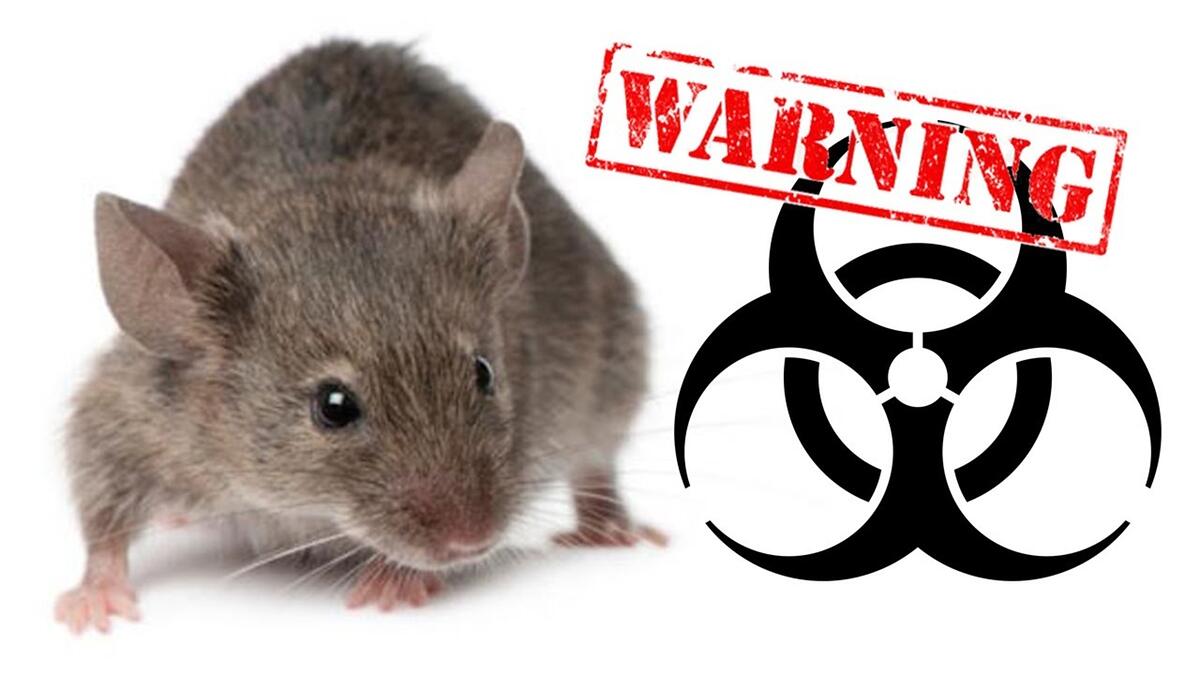
Video: How to safely clean rodent droppings, from Straight To The Point.
How an attic cleanup runs in Houston
The roofline is sealed and the attic goes quiet before anything is removed, so the cleaning is done once.
-
Seal, trap and confirm quiet
Exclusion closes every opening and traps run at least a week. A return visit with no fresh droppings clears the attic for cleanup.
-
Remove and vacuum
Soiled insulation goes out through an insulation vacuum to a truck, then joists, plates and duct are HEPA vacuumed and nests and carcasses are bagged.
-
Disinfect and deodorize
Framing, decking and duct exterior are treated with a disinfectant and an odor neutralizer, with the living space sealed off from the hatch.
-
Re-insulate and record
New blown fiberglass or cellulose goes in to the specified depth, the radiant barrier is checked, and you receive a written record of what was removed, applied and installed.

Why Houston homeowners route attic cleanup through us
The cleanup is sequenced after sealing, scoped against a written grade, and priced in separate lines.
-
Sealed first, so the cleaning is paid for once
The contractor we route will not clean an attic under an open roofline. Exclusion closes every opening at a quarter inch or larger, the UF/IFAS rat-proofing standard, traps stay a week, and only a return visit with no fresh droppings clears the cleanup to start. Homeowner threads are full of attics cleaned twice because the first company fogged the space and left the pipe boot open. The sequence is the difference.
UF/IFAS: rat-proofing figure of a quarter inch; traps in place a week or more
-
Remove and replace where the cellulose is wet
Houston humidity averages about 73 percent, and cellulose that has taken rat urine in that air does not dry out. The Department of Energy notes that wet insulation performs poorly and compressed insulation misses its rated R-value, so the job the contractor we route quotes is removal, treatment and new insulation instead of a spray over the top. Where the insulation is dry fiberglass and the contamination is light, spot cleaning is offered as the cheaper line.
US Department of Energy: wet insulation performs poorly; compressed insulation does not deliver its rated R-value
-
What the respirator is for
The suit and respirator on a Houston attic job are for general contamination from droppings, urine and dust. Hantavirus risk in a Houston attic is low, and most US cases are in the west. The CDC lists rodents as carriers of many diseases spread through urine, droppings, saliva, bites and the fleas, ticks and mites that fed on them, and that is the list the cleanup is built around. The reason for each step is on the quote and in the report.
CDC: rodents spread disease directly through urine, droppings, saliva and bites, and indirectly through fleas, ticks and mites
What Reddit Says About Attic Cleanup in Houston
Homeowner threads on r/pestcontrol, r/HomeImprovement and r/homeowners treat attic cleanup as the part of a rodent job most likely to be oversold or skipped, and the advice starts with itemized quotes. People advise one another to collect several bids on identical scope and to demand that cleanup is priced separately from trapping and sealing, because a bundled number cannot be judged. Asking whether the company does the cleanup itself or refers it out is a standard question.
The red flags are about sequence and substance. A company that offers cleanup or fogging while the roofline is still open draws the same criticism as one that traps with no sealing. Quotes that fold a monthly monitoring contract into the price are called out. So is wildly variable pricing: quotes posted in the threads for similar work range from below $2,000 to well above $20,000, and the question that keeps coming up is whether the poster is being taken for a ride.
The questions people pass around: will you clean up and decontaminate, or only trap; what exactly is included and what is a separate line item; how many return visits are built in; what happens if they come back. Two aftermath problems come up that nobody advertises against. Dead animal odor in a wall or attic after a bait job drives its own searches, and rodent mites after the animals are gone are a real problem people discover on their own.
Under the practical talk is the emotional part: people who have not slept properly in weeks, who feel their home has been invaded, and who were told by friends they were being dramatic until someone opened the attic hatch.
The cleanup quotes we route answer the sequence and line-item questions in writing before the first bag of insulation comes down.
A typical attic cleanup in Houston
The situation: A family of four in a brick two-story slab house in Sugar Land had rats trapped out of the attic by a previous company in the fall, with bait stations left up there as well. By spring the noise is gone but a musky smell comes down the upstairs hallway every hot afternoon, and the AC upstairs never quite catches up. Looking through the hatch with a flashlight they can see flattened runs across the cellulose and dark patches near the furnace closet. They have been told the smell will fade. It has not.
What gets done: The free inspection finds a cracked plastic base on a mushroom vent and an open soffit-to-brick joint at a rear corner that the earlier company never closed, plus one carcass from the bait in the insulation near the furnace platform and chew damage on two flex duct runs. The roofline is sealed with hardware cloth and sheet metal and traps go up for a week; the return visit finds nothing new. On cleanup day the crew that attends runs the insulation vacuum from the driveway, takes the cellulose out to the drywall, removes the carcass and three nests, HEPA vacuums the joists and duct, and treats the framing with a disinfectant and an odor neutralizer. The two duct runs are flagged for the HVAC contractor. Blown fiberglass goes in the next morning to the specified depth, and the radiant barrier on the rafters is reattached where it had been pulled down.
How it turns out: The smell leaves with the carcass and the cellulose, the upstairs holds temperature once the duct is repaired, and the family receives a record listing the openings sealed, what was removed and applied, and the new insulation depth, on separate lines they can compare with the fall invoice.
Attic cleanup questions from Houston homeowners
These are asked on the phone and in homeowner threads about what happens once the rats are gone.
Whether and when to clean
Do I really need the attic cleaned, or will the smell fade on its own?
Light contamination in dry fiberglass can be spot cleaned and the smell does fade once the source is gone. Wet cellulose is another matter. In Houston humidity, insulation soaked with urine stays wet, keeps smelling on hot afternoons, and loses its loft, so the Department of Energy point about wet and compressed insulation underperforming applies. Leaving droppings and nesting in place also leaves the scent trail that draws the next animal to the same roofline. The free inspection grades the contamination and says which case the attic is.
Can the attic be cleaned before the rats are gone?
It can be, and it should be refused. A cleanup under an open roofline is fouled again within weeks, and a company willing to do it is charging for work that will need repeating. The sequence the contractor we route follows is sealing first, traps in place at least a week per UF/IFAS guidance on wary roof rats, a return visit that finds no fresh droppings, and then the cleanup. On the timeline, HomeGuide's range is a few days for a small trapping job and up to two months for a severe one.
Is the respirator because of hantavirus?
The respirator is for general contamination: dust from dried droppings, urine residue and insulation fibers. Hantavirus risk in a Houston attic is low, and most US cases are in western states with different rodent species. The CDC does note that rodents carry many diseases spread through urine, droppings, saliva and bites, and through fleas, ticks and mites, which is why the attic is wetted before disturbance and why nobody dry sweeps. The precautions are correct on those grounds without any hantavirus story attached.
The work and the cost
What happens to the ducts and wiring the rats chewed?
Chewed flex duct and wiring are found and photographed during the cleanup, once the insulation is out and the framing is visible, and they are flagged for the HVAC contractor and the electrician as separate trades. UF/IFAS notes that rats chew through wires and can potentially start fires, so chewed wiring is treated as urgent. Duct damage explains the upstairs that never cools and the attic air being pulled into the system. Some contractors handle minor duct repair on the same visit; ask whether it is on the quote or referred out.
Why is the quote higher for cellulose than for fiberglass?
Cellulose is heavier, holds water and packs down when wet, so it takes longer to vacuum out, fills more bags and costs more to haul. It also nests better and soaks up more urine, which usually means all of it comes out where fiberglass might be spot cleaned. HomeGuide's 2026 figures put insulation removal and replacement at $2.50 to $5.50 per square foot and cleanup and decontamination at $600 to $2,500, and a wet cellulose attic sits toward the top of both. The free inspection gives the number for your square footage.
Still have a question? Call (713) 804-8785 and ask.